

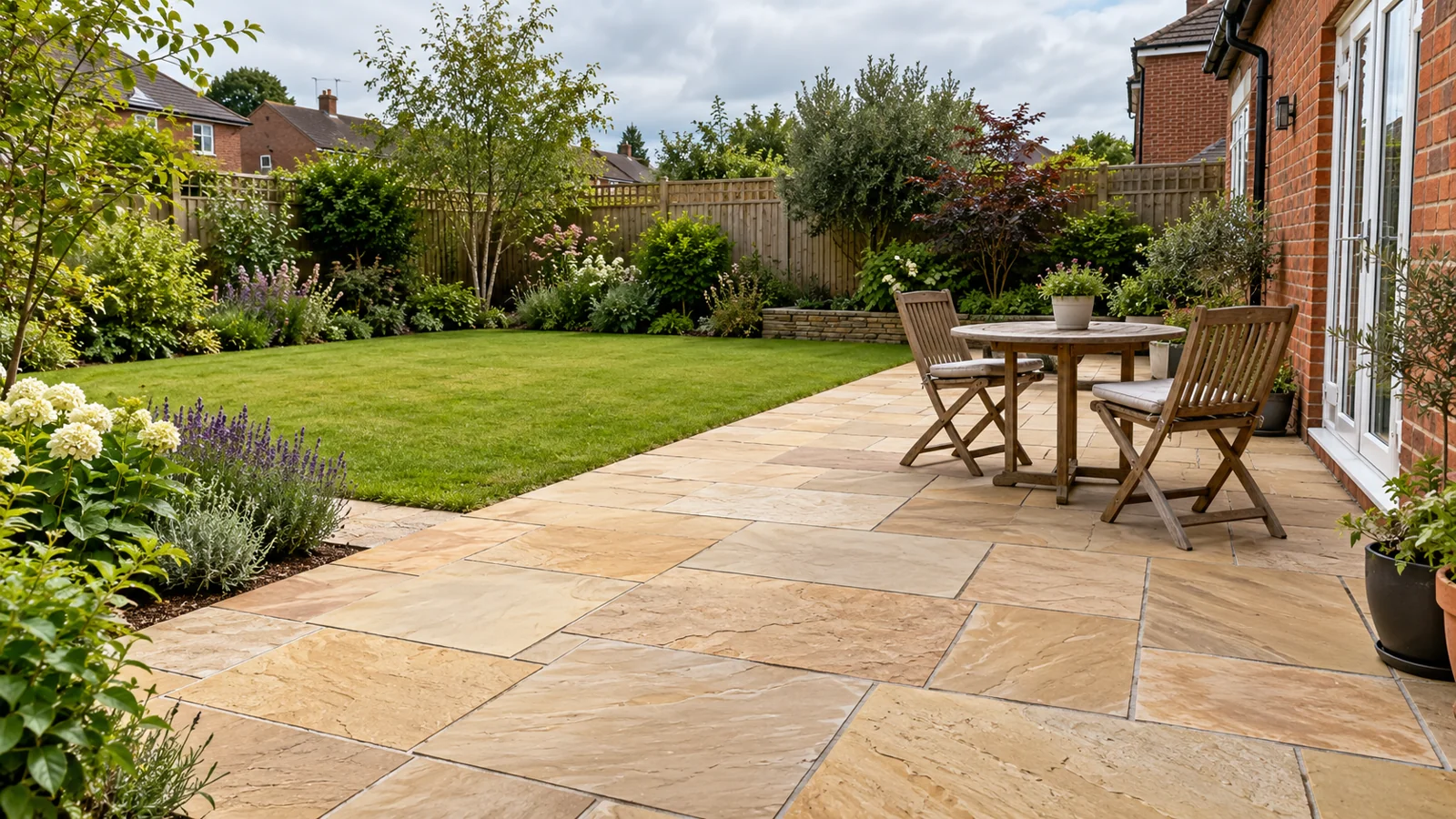
Featured image: AI-generated illustration.
Choose a porcelain or sandstone patio by comparing the finish you want, the care you can give it and the complete installation specification. Porcelain generally suits a consistent appearance and straightforward cleaning. Sandstone suits a garden where natural colour variation and texture are part of the appeal. Neither material makes up for poor ground preparation or drainage.
The useful comparison is between two named paving products installed properly in the same garden. A cheap slab price alone tells you little about the final bill, particularly when excavation, access, steps or awkward cuts account for much of the work.
Porcelain or sandstone patio: the practical comparison
| Decision | Porcelain | Sandstone |
|---|---|---|
| Appearance | Manufactured finish; check pattern repetition and batch shade. | Natural variation in colour, markings and texture; inspect several slabs. |
| Surface choice | Choose a product expressly suitable for outdoor paving. | Compare riven and sawn finishes, plus the actual stone specification. |
| Cleaning | Low absorption can make spills easier to manage; joints still need care. | Absorbency and cleaning needs vary; obtain product-specific care advice. |
| Installation | Confirm the prescribed bedding, primer, cutting and jointing system. | Confirm thickness tolerances, bedding, primer and suitable jointing. |
| Budget | Price the complete layout, including cuts, edges and preparation. | Price the named stone grade and finish with the same groundwork. |
Which appearance will work in your garden?
Porcelain can provide an orderly, contemporary finish, including designs that imitate stone. Look at a laid display or several full-size samples: a single tile will not reveal how often a printed pattern repeats. Check the colour in daylight beside your brickwork, doors and garden furniture.
Sandstone has natural differences between slabs. Buff, grey and mixed tones can soften a garden design, but the variation should be something you welcome. A small sample cannot promise the exact colour balance of a delivered pack. Ask to see the expected range, including darker markings, and agree how slabs will be blended before laying.
Texture matters as much as colour. A riven surface has natural clefts, while sawn products can offer a flatter appearance. Try a chair on the sample or display and consider wheeled furniture, bare feet and the route from the back door. Choose the particular finish that suits those uses rather than assuming every sandstone or porcelain product feels the same.
Wet weather, shade and cleaning
Do not treat either material name as a guarantee of grip. Ask for the manufacturer’s slip information for the exact outdoor product and discuss the intended location. A shaded route beside planting has different cleaning demands from an open dining terrace. Leaves, dirt and surface growth still need removing from either patio.
Porcelain’s low absorption is a useful feature when easy cleaning is a priority, but it does not make the whole installation maintenance-free. Joints can collect dirt and drains can block. Sandstone care depends on the particular stone and finish; ask which cleaners are suitable and whether a compatible sealer is recommended. Sealing should follow the supplier’s instructions rather than being added automatically to every stone patio.
Whichever surface you choose, obtain written aftercare instructions. Check pressure-washing restrictions and jointing cure times before cleaning a new patio. If the wider garden is already difficult to keep on top of, our guide to one-off garden tidy-ups and regular maintenance can help you plan the ongoing work.
Installation details that matter more than the label
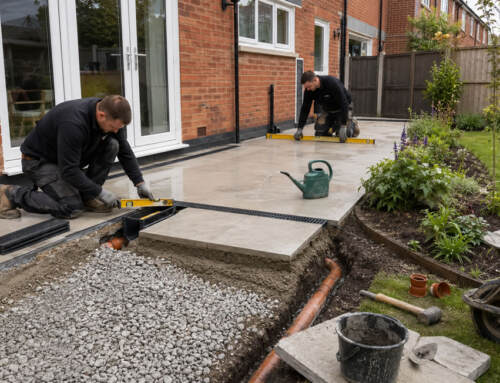
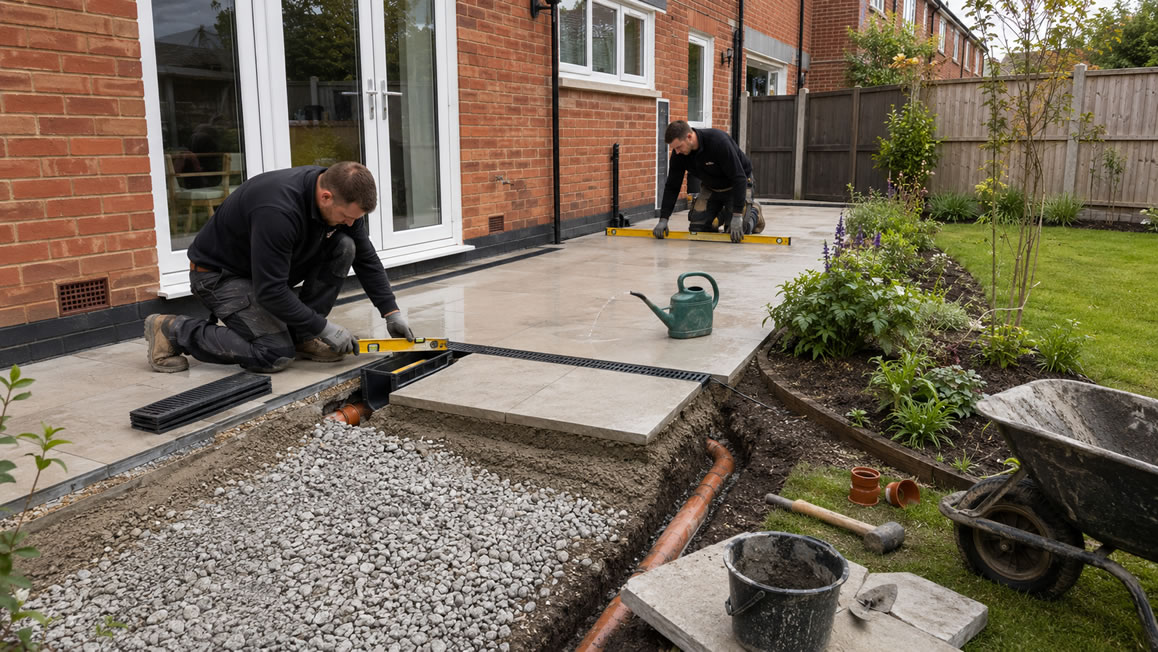
Ask the contractor to set out how the ground will be prepared, what will support the paving and where rainwater will go. An attractive surface can still rock, settle or hold puddles if those details are wrong. Existing paving should not be assumed to provide a suitable base without inspection.
The paving system must suit the chosen product. For example, Marshalls’ garden paving technical guidance specifies priming and full mortar bedding for its porcelain ranges, with suitable tools and installation techniques. Its natural stone guidance also recommends slurry priming. Use the relevant manufacturer’s instructions for the product you actually buy; do not transfer one range’s details to every slab.
Porcelain can involve demanding cutting, especially around inspection covers, drain channels and narrow borders. Sandstone thickness and finish also affect laying and detailing. Ask to see comparable work using the proposed material, including edges and awkward corners rather than only broad views of a finished patio.
Resolve drainage before agreeing finished levels
Confirm the intended falls, the water collection route and any drainage work. Keep the discussion tied to doors, air bricks and damp-proof details. Choosing a different slab does not remove the need for a drainage design, and permeable jointing alone does not establish that the whole patio construction is permeable.
Read our guide to patio drainage and preventing standing water before a site visit. If either quotation leaves drainage as an undefined extra, ask for the scope to be settled before comparing totals.
Ask how cutting and access will be managed
A narrow gate or a route through the house can change the method and labour needed. Tell each contractor about these constraints. Also ask where cutting will take place and how the household will be kept away from the work area. HSE guidance on cutting paving explains why silica dust needs effective controls; a short cutting task still needs a planned method.
Which patio will cost less overall?
There is no reliable universal winner. The selected product, garden access, excavation, waste removal, layout and finishing details all affect the installed total. Premium sandstone can cost more than some porcelain products, while difficult porcelain cuts can change labour allowances. Compare itemised quotations rather than assuming a material always occupies the cheaper end of the market.
For a starting point when researching patio installation prices, My Paving Prices accepts enquiries for patio work and introduces homeowners to independent paving businesses, subject to availability. Use a written site-specific quotation to establish the cost of your preferred design.
Give every contractor the same measured area and ask for two alternatives: your named porcelain product and your named sandstone product. Keep the patio footprint, drainage, steps and edge treatment unchanged. That makes the difference in the totals more meaningful.
- Paving supply: product name, size, thickness, finish, quantity and allowance for cutting waste.
- Preparation: lifting existing surfaces, excavation, sub-base and disposal.
- Installation: bedding, primer, laying, cutting and jointing.
- Details: drainage, inspection covers, edges, steps and making good.
- Commercial terms: VAT treatment, exclusions, provisional allowances, payment stages and guarantee terms.
A small patio can still require delivery arrangements, waste handling and several visits. Dividing the total by the area can help compare otherwise identical offers, but it should not hide those fixed tasks. Ask which assumptions could change after excavation and how extra work would be authorised.
How to prepare a porcelain and sandstone comparison brief
You will need a tape measure, a few garden photographs and the product details or samples you are considering. This is preparation for quotations, not a laying guide. Have the installer confirm dimensions and construction requirements on site.
- Record the usable space. Sketch the intended patio, doors, drains, beds and access route. Note the furniture and clear walking space you need.
- Choose two named products. Record the manufacturer or supplier, range, finish, size and thickness for one porcelain and one sandstone option.
- Agree a shared construction brief. Ask contractors to assess existing ground, finished levels, drainage, edges and any steps using the same project layout.
- Request itemised alternatives. Separate the paving choice from shared preparation and finishing work, with VAT and exclusions stated.
- Check the final specification. Review samples, installation instructions, care requirements, waste arrangements and payment terms before appointing the contractor.
Which choice makes sense for you?
Porcelain is a strong option if you favour a consistent finish and lower-absorption paving, and you have an installer comfortable with the selected system. Sandstone is a strong option if natural variation is central to the design and you accept the care requirements of the particular stone.
If you like both, let full-size samples and like-for-like written quotations settle the decision. Resolve the groundwork and drainage first, then choose the surface you will enjoy living with.
Frequently asked questions
Is porcelain always cheaper than sandstone?
No. Product grade, finish, cutting, access and groundwork all affect the total. Compare two named products within the same installation brief.
Does sandstone always need sealing?
No single rule covers every sandstone product. Ask the supplier whether sealing is recommended for the chosen stone and use a compatible system if specified.
Can I use indoor porcelain tiles for a patio?
Choose a product expressly specified for the intended outdoor paving use. Ask the supplier to confirm suitability and the installation system rather than relying on appearance.
Will porcelain stop a patio becoming slippery?
No surface is a guarantee against slipping. Check the exact product’s slip information, plan drainage and remove leaves, dirt and surface growth.
Can I keep the same base when changing patio materials?
Only if an on-site assessment confirms that it suits the new paving system and is sound. Ask the contractor to explain any investigation, repairs or replacement needed.
Start with two suitable samples and one clear project brief, then request written installation quotes that cover the same work.