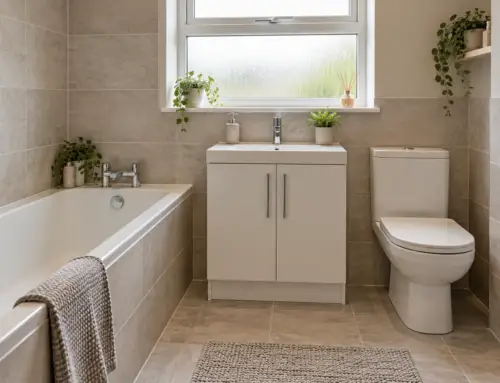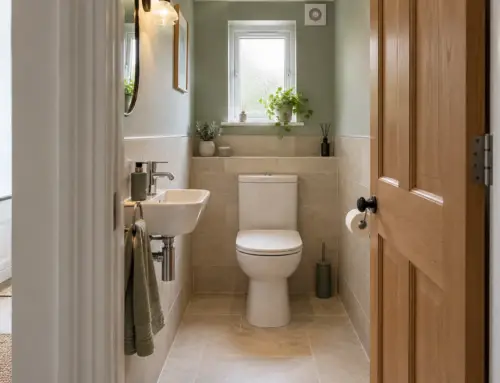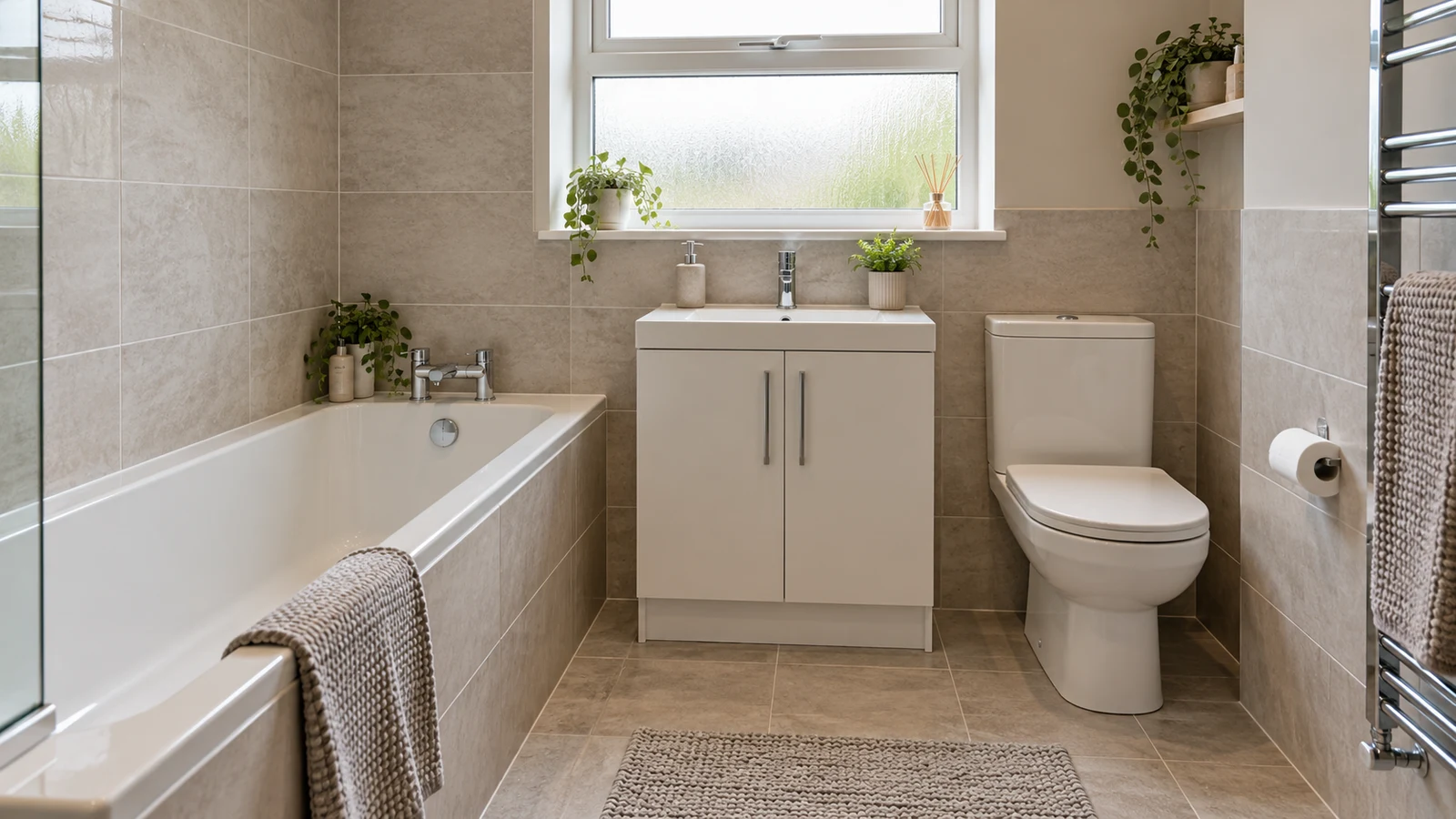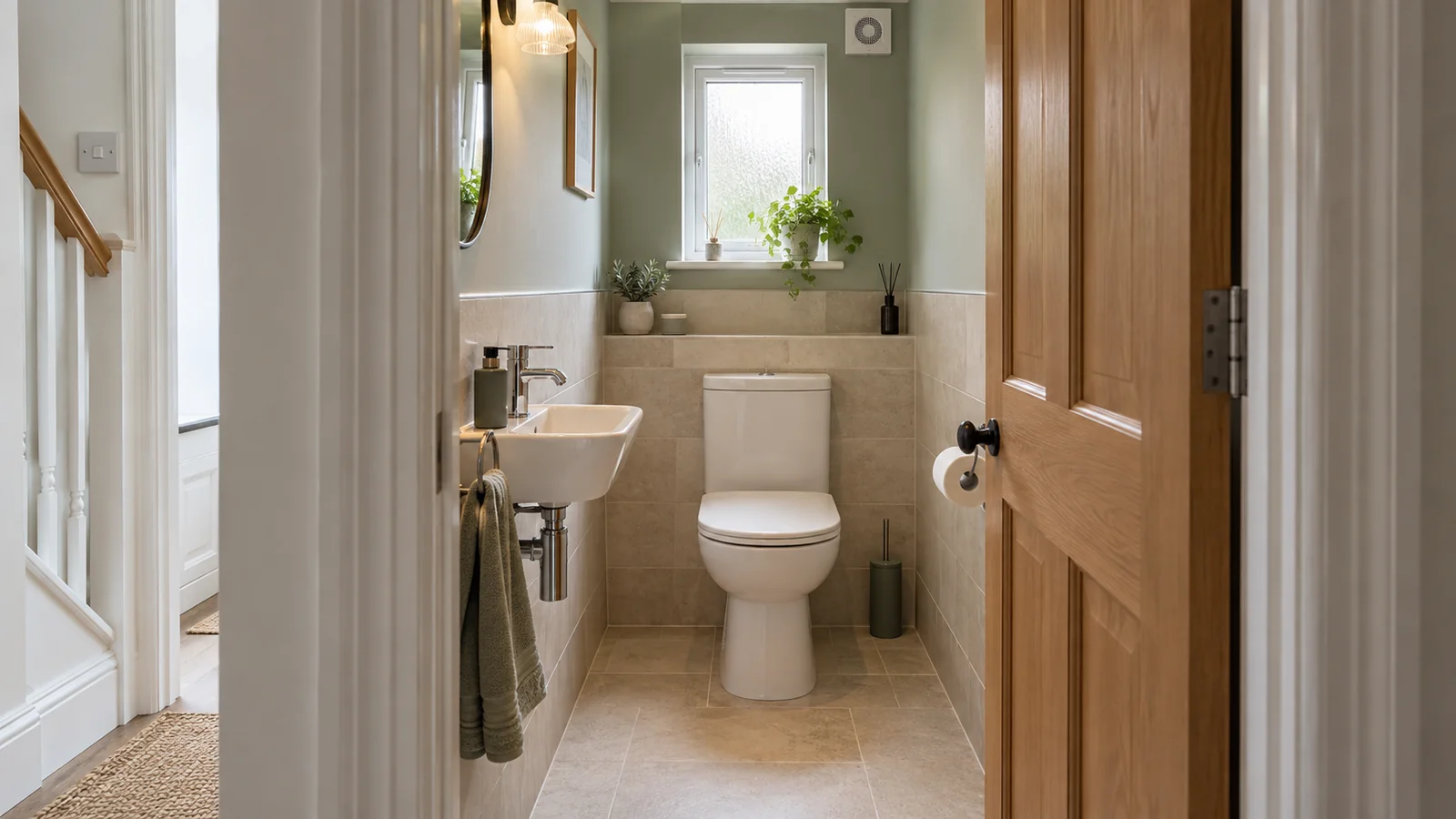


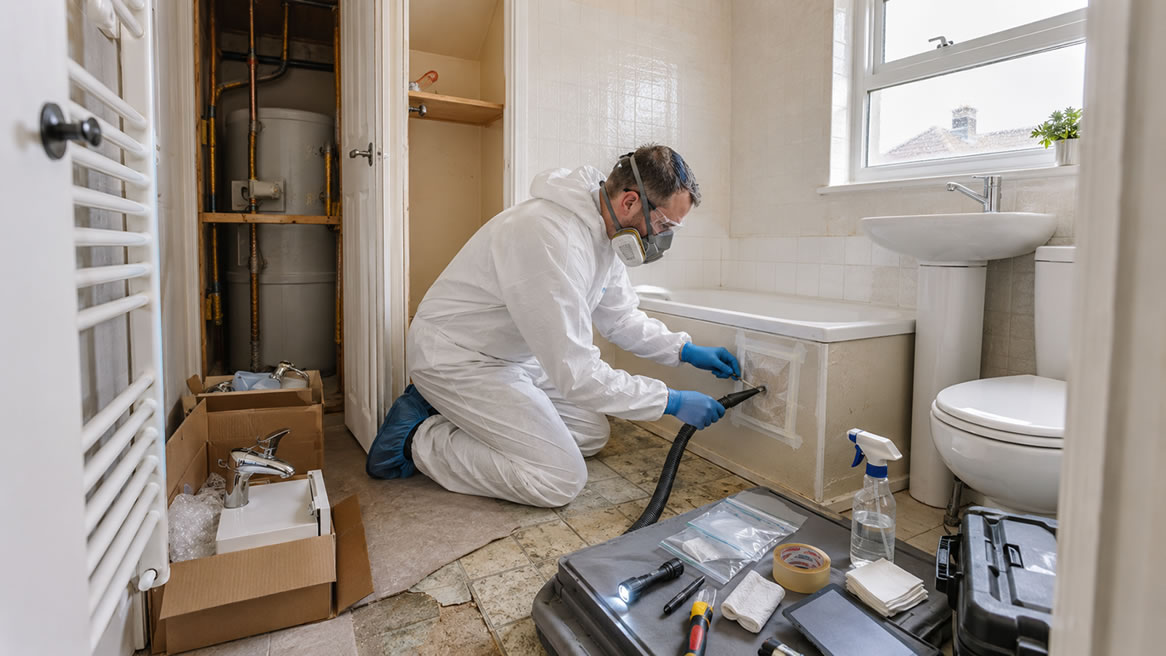
A bathroom renovation can uncover far more than old tiles and tired sanitaryware.
Once the bath, toilet, flooring, ceiling coverings and pipe boxing start coming out, contractors may expose building materials that have been hidden for decades. In homes built or refurbished before 2000, some of those materials may contain asbestos.
That does not mean every old bathroom contains asbestos.
However, asbestos was used in a wide range of domestic building products, and HSE guidance specifically identifies bathrooms as one of the areas where asbestos-containing materials such as vinyl floor tiles, textured coatings and asbestos insulating board bath panels may be encountered.
Testing before work starts can therefore be worthwhile, especially where the renovation involves a full strip-out rather than simply replacing taps or sanitaryware.
This guide explains where asbestos may be found in an older bathroom, when individual sampling may be enough, when a refurbishment survey makes more sense, what testing costs and how to fit asbestos checks into the bathroom renovation schedule.
Why Asbestos Can Become an Issue During Bathroom Renovation
Asbestos is often not obvious until building work begins.
A bathroom may have been refurbished several times over its lifetime.
For example, a modern-looking room could have:
- Laminate flooring over old vinyl tiles
- New plaster over an older textured coating
- Modern boxing covering an older asbestos board
- Replacement sanitaryware fitted around an original bath panel
- New tiles installed over older backing materials
As a result, the apparent age of the bathroom does not always tell you the age of everything underneath it.
HSE’s survey guidance notes that domestic properties built before 2000 can contain asbestos unpredictably because of original construction, later alterations, previous removals and unrecorded refurbishment work.
When Should You Think About Asbestos Testing?
Testing is worth considering where:
- The property was built before 2000
- Bathroom dates from the 1960s, 1970s, 1980s or 1990s
- Older materials remain beneath newer finishes
- Textured ceiling is being removed
- Old vinyl tiles will be lifted
- Bath panels or pipe boxing will be broken out
- Walls or ceilings will be opened
- Boiler or heating equipment is being removed
- Full bathroom strip-out is planned
The more intrusive the renovation, the stronger the case for checking suspect materials before work begins.
Bathroom Asbestos Locations at a Glance
| Bathroom Area | Possible Asbestos Material |
|---|---|
| Floor | Vinyl or thermoplastic tiles |
| Beneath flooring | Bituminous adhesive or older floor products |
| Ceiling | Textured decorative coating |
| Bath panel | Asbestos insulating board |
| Pipe boxing | AIB or asbestos cement |
| Partition wall | Asbestos insulating board |
| Heater area | Heat-resistant asbestos board |
| Boiler cupboard | AIB, insulation or gaskets |
| Airing cupboard | AIB and pipe insulation |
| Wall panels | Asbestos insulating board |
| Electrical panel | Asbestos backing board |
| Old cistern/toilet components | Some asbestos-containing moulded products |
1. Old Bathroom Floor Tiles
Old floor coverings are one of the most common areas worth checking during a refurbishment.
Some older bathrooms contain:
- Thermoplastic tiles
- Vinyl tiles
- Older sheet flooring
- Bituminous adhesive
HSE lists vinyl floor tiles among asbestos-containing products historically found in residential properties.
These floors may have been covered rather than removed during previous renovations.
Asbestos Tiles Hidden Under Modern Flooring
You may lift:
- Laminate
- Vinyl
- Carpet
- Modern tiles
and find small square tiles underneath.
They may be:
- Black
- Brown
- Green
- Red
- Beige
- Marbled
Appearance alone cannot confirm asbestos.
If the old tiles need breaking, grinding or mechanically removing, testing first can avoid accidental disturbance.
What About Black Adhesive?
Old dark bituminous adhesive beneath tiles is sometimes associated with asbestos-containing flooring systems.
However, black adhesive is not automatically asbestos.
If the adhesive itself will be:
- Ground
- Scraped mechanically
- Removed extensively
it may be appropriate to include it within the sampling plan.
2. Textured Bathroom Ceilings
Textured coatings such as Artex-style finishes are common in older UK bathrooms.
Some historic formulations contained asbestos.
HSE includes textured decorative coatings on ceilings and walls among typical domestic asbestos-containing materials.
Not every textured coating contains asbestos, so visual appearance is not enough.
When Testing a Textured Ceiling Makes Sense
Consider testing where the renovation will involve:
- Scraping
- Sanding
- Removing the ceiling
- Drilling extensively
- Installing new downlights
- Opening the ceiling for pipework
If the ceiling is simply being left untouched, testing may be less urgent.
Can You Plaster Over an Asbestos-Containing Textured Ceiling?
In some circumstances, sound material may be managed in place rather than removed.
However, plastering or overboarding can still involve:
- Drilling
- Fixings
- Electrical work
The contractor needs to know what is present before disturbing it.
3. Old Bath Panels
This is a particularly relevant bathroom location.
HSE’s residential asbestos illustration specifically identifies asbestos insulating board bath panels as a historic use of asbestos.
An old bath panel may look like:
- Flat grey board
- Off-white board
- Fibreboard
- Cement-type sheet
It should not automatically be assumed to be ordinary plywood or modern cement board.
Why AIB Deserves More Care
Asbestos insulating board, commonly called AIB, can release fibres more readily when broken than hard asbestos cement.
A bath panel scheduled for demolition should therefore be assessed before someone attacks it with a hammer or reciprocating saw.
4. Pipe Boxing
Bathrooms often contain boxed-in pipework around:
- Toilet
- Basin
- Bath
- Soil stack
- Heating pipes
Older boxing may contain:
- Timber
- Plasterboard
- Cement board
- Asbestos insulating board
Unfortunately, some of these materials can look very similar.
The risk often appears when the fitter starts opening the boxing to relocate plumbing.
5. Partition Walls
Some older internal partitions contain asbestos insulating board.
This can matter during bathroom redesigns where homeowners want to:
- Move a doorway
- Enlarge shower area
- Create an ensuite
- Combine bathroom and toilet
- Remove airing cupboard
HSE lists AIB partition walls among potential asbestos locations within residential buildings.
6. Airing Cupboards
Older bathrooms frequently sit beside an airing cupboard.
These areas may contain:
- Old hot-water cylinders
- Heating pipework
- Fire-resistant boards
- Pipe insulation
HSE identifies asbestos insulating board around airing cupboards, boilers and hot-water systems as one historic domestic use.
If the bathroom renovation includes removing the cupboard, additional checking may be sensible.
7. Old Pipe Insulation
Older heating and hot-water pipes may have been lagged with asbestos-containing insulation.
This is generally a more concerning material than asbestos cement because it can be more friable.
Possible locations include:
- Airing cupboards
- Service ducts
- Under floors
- Behind boxing
Do not disturb suspect fibrous lagging simply to take a closer look.
8. Boiler and Heater Panels
Some older homes have or previously had:
- Wall-mounted heaters
- Warm-air systems
- Boilers
Heat-resistant asbestos board may have been installed around these appliances.
HSE lists AIB around boilers, storage heaters and warm-air heating systems as recognised historic domestic uses.
9. Old Electrical Panels
Bathrooms themselves should have carefully controlled electrical installations, but adjacent cupboards may contain old electrical boards.
Older backing panels can contain asbestos.
This can become relevant when electricians are:
- Rewiring
- Installing new bathroom circuits
- Moving switches
- Replacing old consumer equipment
Does Every Bathroom Built Before 2000 Need Testing?
No.
The age of the property tells you that asbestos may be possible, not that it is definitely present.
Testing should be proportionate to the work being planned.
For example:
Simple Tap Replacement
Usually little reason for an asbestos survey unless suspicious material is disturbed.
Replacing a Toilet in the Same Position
Potential asbestos disturbance may be very limited.
Complete Bathroom Strip-Out
Much more reason to identify suspect floors, ceilings, panels and boxing first.
Testing One Material vs Surveying the Bathroom
This is one of the most important distinctions.
Asbestos Sampling
Sampling answers:
Does this particular material contain asbestos?
A surveyor takes a representative sample and sends it for laboratory analysis.
This can be suitable if only one or two obvious materials are being disturbed.
Refurbishment Survey
A refurbishment survey answers a broader question:
Where could asbestos be present within the parts of the bathroom that are going to be disturbed?
HSE’s HSG264 survey guidance distinguishes refurbishment surveys from normal management surveys because refurbishment can expose asbestos hidden inside the building fabric.
When Individual Sampling May Be Enough
Suppose you are:
- Keeping bathroom layout
- Retaining ceiling
- Not opening walls
- Only replacing floor
and the only concern is an old layer of vinyl tile.
Testing that flooring may be enough.
When a Refurbishment Survey Makes More Sense
Consider a more intrusive bathroom survey if the project involves:
- Full strip-out
- Ceiling removal
- Wall removal
- Opening pipe boxing
- Removing airing cupboard
- Major plumbing relocation
- New electrics inside walls
- Removing old heating equipment
This allows the survey scope to follow the actual renovation work.
What Is a Bathroom Refurbishment Asbestos Survey?
The surveyor needs to investigate the areas that will be disturbed.
Depending on the renovation, this may include:
- Floor
- Ceiling
- Wall panels
- Bath panel
- Boxing
- Service ducts
- Airing cupboard
Unlike a simple visual inspection, a refurbishment survey can involve controlled intrusive access.
Does the Survey Need to Cover the Whole House?
Not necessarily.
If work is limited to one bathroom, the intrusive survey can often focus on that area.
However, it should include any connected spaces that will also be disturbed.
For example:
- Adjacent airing cupboard
- Ceiling void
- Service duct
- Floor void
The key is to explain the building work accurately.
What Should You Tell the Surveyor?
Provide information such as:
- Property age
- Approximate bathroom age
- Planned layout
- Walls being removed
- Ceiling work
- Flooring removal
- Pipe routes
- Boiler or cylinder removal
- New electrical work
If you have drawings from a bathroom designer, share them.
How Asbestos Sampling Works
The surveyor normally:
- Identifies the suspect material.
- Selects a representative sampling point.
- Controls disturbance.
- Takes a small sample.
- Seals or makes safe the sampling point where appropriate.
- Packages and labels the sample.
- Sends it for laboratory analysis.
HSE’s current HSG248 guidance is the authoritative analytical guidance in Great Britain for asbestos sampling and laboratory analysis.
Can You Tell Asbestos From a Photograph?
Not reliably.
Photographs may identify materials that deserve investigation, but they cannot normally confirm whether a product contains asbestos.
This is because non-asbestos alternatives can look extremely similar.
Should You Buy a DIY Asbestos Testing Kit?
Home testing kits normally require the homeowner to take the sample themselves.
That means you are deliberately disturbing a material which you already suspect could contain asbestos.
For most homeowners, professional sampling is the more sensible option, particularly for:
- AIB
- Damaged materials
- Pipe insulation
- Hard-to-access areas
How Long Does Asbestos Testing Take?
Turnaround varies.
Some laboratories offer:
- Same-day
- 24-hour
- 48-hour
analysis at additional cost.
Standard results may take several working days depending on the provider.
It is better to arrange testing before the bathroom installer is due to start rather than treating it as an emergency once demolition is underway.
When Should Testing Be Booked?
Ideally:
Before the bathroom strip-out date is confirmed.
A sensible order is:
- Decide renovation scope.
- Identify possible asbestos.
- Arrange survey/testing.
- Receive results.
- Arrange asbestos work if needed.
- Start bathroom renovation.
This reduces delays.
What Happens If the Result Is Negative?
If the tested material does not contain asbestos, renovation can proceed in relation to that material.
Remember, however, that a negative result only applies to the sampled material.
It does not prove the entire bathroom is asbestos-free unless the broader survey scope supports that conclusion.
What Happens If Asbestos Is Found?
The next step depends on:
- Material type
- Condition
- Planned disturbance
Possible approaches include:
- Leave it in place
- Work around it
- Encapsulate it
- Remove it before renovation
A full strip-out usually means asbestos directly affected by the work needs dealing with before the bathroom fitter begins disturbing it.
Does Asbestos Always Have to Be Removed?
No.
Sound asbestos that will remain undisturbed can sometimes be managed in place.
However, a material behind a bath panel may be impossible to leave safely if the wall needs demolishing.
The renovation scope makes the difference.
Can a Bathroom Fitter Remove Asbestos?
This depends on the asbestos material and exact work.
Some lower-risk asbestos work can be non-licensed where legal requirements and appropriate controls are met.
Other asbestos work requires a licensed contractor.
Do not assume a general bathroom fitter is qualified or equipped to undertake asbestos removal.
Licensed vs Non-Licensed Asbestos Work
Broadly, the risk depends on:
- Material type
- Condition
- Friability
- How much disturbance is required
For example, certain work on intact asbestos cement may fall into a different category from work involving asbestos insulating board or pipe lagging.
The contractor should classify the work correctly before starting.
Why Bathroom Contractors Need the Survey Results
Relevant asbestos information should be shared with:
- Bathroom fitter
- Plumber
- Electrician
- Tiler
- Builder
- Heating engineer
Several trades may drill or cut into the same surfaces.
The information is therefore useful to the entire project team.
What if Asbestos Is Found Halfway Through the Renovation?
Stop work in the affected area.
Do not continue:
- Breaking
- Drilling
- Sweeping
- Vacuuming with household equipment
Professional assessment may then be needed.
Discovering asbestos at this point can cause significant delays because the project may already have:
- Trades booked
- Skip on site
- New bathroom delivered
- Tiler scheduled
Testing first is usually much simpler.
Asbestos and Bathroom Floor Removal
Old flooring deserves special attention because removal methods can vary greatly.
A contractor might otherwise plan to use:
- Scraper
- Floor grinder
- Breaker
Those methods can create more disturbance than carefully lifting intact material.
Knowing what is present changes how the job is planned.
Asbestos and Bathroom Tiling
Old walls may hide several layers.
A typical renovation could reveal:
- Ceramic tiles
- Adhesive
- Plasterboard
- Older board
The visible tiles themselves may not be the problem.
The backing board could be.
Asbestos Behind a Shower
Older shower enclosures may have heat- or moisture-resistant boards behind them.
If the shower wall is going back to studs, the installer should know what those boards are before cutting them.
Asbestos and New Downlights
Adding recessed lights can involve cutting several holes through an old ceiling.
If the ceiling contains asbestos-containing textured coating, this needs consideration before electricians start drilling.
Testing beforehand can prevent avoidable disturbance.
Asbestos and Extractor Fans
Installing or replacing a bathroom extractor may involve:
- Drilling ceiling
- Opening wall
- Core drilling external wall
Again, older surfaces need to be understood before intrusive work begins.
Asbestos and Moving the Toilet
Relocating a toilet may require:
- Opening floor
- Altering boxing
- Accessing soil stack
This can reveal old boards or floor products that were previously hidden.
Asbestos and Moving the Bath or Shower
Major bathroom redesigns can expose more building fabric than a simple suite replacement.
The more you change the layout, the more useful a refurbishment-focused asbestos assessment becomes.
Asbestos Testing Costs Before Bathroom Renovation
Broad UK budgeting ranges might be:
| Service | Typical Budget |
| Single asbestos sample | £50–£120 |
| Two or three samples | £100–£250 |
| Bathroom asbestos inspection | £150–£300 |
| Bathroom refurbishment survey | £200–£400 |
| Larger multi-room refurbishment survey | £300–£700+ |
Prices vary by location, number of samples and access.
Is Testing Worth the Cost?
Compared with a bathroom renovation costing several thousand pounds, asbestos testing is usually a relatively small part of the project.
It can help avoid:
- Work stoppages
- Contamination
- Delayed trades
- Emergency surveys
- Unplanned removal costs
This is particularly valuable before a complete strip-out.
Typical Bathroom Renovation Budget
Broad UK budgets might be:
| Bathroom Project | Typical Cost |
| Basic suite replacement | £4,000–£6,000 |
| Standard refurbishment | £6,000–£10,000 |
| Major redesign | £8,000–£15,000 |
| Higher-spec renovation | £12,000–£20,000+ |
Against these figures, a few hundred pounds for appropriate asbestos investigation can be a sensible precaution in an older property.
Does Asbestos Removal Increase Bathroom Renovation Costs?
Yes.
Possible additional costs include:
- Survey
- Laboratory analysis
- Specialist removal
- Waste disposal
- Reinstatement
The amount varies greatly depending on the material.
Removing a small flooring area may cost far less than dealing with substantial AIB or damaged pipe insulation.
Broad Asbestos Removal Budget Examples
| Work | Approximate Budget |
| Small floor tile area | £300–£800 |
| Small AIB item | £300–£800+ |
| Textured coating | £800–£2,500+ |
| Larger AIB removal | £1,000–£3,000+ |
| Pipe insulation | £1,000–£5,000+ |
These are only broad estimates.
Should You Automatically Remove All Asbestos While Renovating?
Not necessarily.
Ask:
- Will it be disturbed?
- Is it damaged?
- Will it become inaccessible?
- Will future trades need access?
If sound asbestos sits outside the work area, unnecessary removal may not provide much benefit.
Should You Test Before Buying the New Bathroom?
Ideally, establish any major asbestos issues early.
If removal adds:
- £1,000
- £2,000
- £3,000
to the project, you may want to adjust the budget for:
- Tiles
- Sanitaryware
- Fittings
Knowing this before placing large orders is helpful.
What Should an Asbestos Testing Quote Include?
| Item | Why It Matters |
| Survey or sampling type | Confirms scope |
| Bathroom areas included | Avoids gaps |
| Number of samples | Affects cost |
| Laboratory analysis | Should be clear |
| Photographs | Helps identify locations |
| Intrusive access | Important for refurbishment |
| Areas not inspected | Shows limitations |
| Written report | Essential for contractors |
| VAT | Confirms total |
Questions to Ask the Surveyor
- Do I need sampling or a refurbishment survey?
- Which parts of the bathroom will you inspect?
- Will you inspect beneath flooring?
- Will pipe boxing be included?
- What about the bath panel?
- Will you inspect the ceiling?
- Is the airing cupboard included?
- How many samples are included?
- Is laboratory analysis included?
- Will inaccessible areas be listed?
- How quickly will I receive results?
- Is VAT included?
Questions to Ask Your Bathroom Installer
- Have you considered asbestos before strip-out?
- Which materials will you disturb?
- Will the ceiling be drilled?
- Will walls or boxing be removed?
- Will the flooring be mechanically removed?
- What happens if suspicious material is uncovered?
- Will you stop work until it is identified?
- Do you need a copy of the survey?
A professional installer should be comfortable discussing these issues.
Common Mistakes
Assuming the Bathroom Is Too Modern to Contain Asbestos
Older materials may remain underneath newer finishes.
Testing Only the Most Obvious Material
A negative ceiling sample does not tell you anything about the floor or bath panel.
Starting Demolition Before Results Arrive
This defeats the point of testing.
Asking for “an Asbestos Test” Without Explaining the Renovation
Tell the surveyor what will actually be removed.
Assuming a Bathroom Fitter Can Identify Asbestos Visually
Appearance alone is not reliable.
Breaking an Old Bath Panel Before Checking It
AIB was historically used for some bath panels.
Grinding Old Floor Adhesive Without Investigation
Testing may be sensible where older flooring systems are being mechanically removed.
Bathroom Asbestos Testing Checklist
| Item | Checked? |
| Property age established | |
| Bathroom renovation scope agreed | |
| Old flooring checked | |
| Textured ceiling checked | |
| Bath panel checked | |
| Pipe boxing checked | |
| Partition walls considered | |
| Airing cupboard included | |
| Heating equipment considered | |
| Electrical backing boards considered | |
| Survey type agreed | |
| Samples analysed | |
| Report received | |
| Bathroom contractor informed | |
| Removal arranged if necessary |
Frequently Asked Questions
Should I get asbestos testing before renovating a bathroom?
It is worth considering for bathrooms in properties built or refurbished before 2000 where the renovation will disturb older flooring, ceilings, panels, boxing or walls.
Where is asbestos commonly found in old bathrooms?
Possible locations include vinyl floor tiles, textured ceilings, asbestos insulating board bath panels, pipe boxing, partition walls and nearby airing cupboards.
Can bathroom floor tiles contain asbestos?
Yes. Some older vinyl and thermoplastic floor tiles contained asbestos.
Can an old bath panel contain asbestos?
Yes. HSE identifies asbestos insulating board as one material historically used for some bath panels.
Can Artex in a bathroom contain asbestos?
Some older textured decorative coatings contained asbestos, although not all Artex-style ceilings do.
Do I need a full asbestos survey for one bathroom?
Not always. If only one known material will be disturbed, sampling may be sufficient. A more intrusive refurbishment survey is generally more appropriate for a complete strip-out.
What is the difference between sampling and a refurbishment survey?
Sampling tests a specific material. A refurbishment survey systematically investigates the areas that will be disturbed during planned building work.
Does a negative asbestos sample mean the bathroom is asbestos-free?
No. It only confirms that asbestos was not detected in the particular sample tested.
How much does bathroom asbestos testing cost?
One sample may cost roughly £50–£120, while a small bathroom-focused survey might cost around £150–£400 depending on scope.
How long does asbestos testing take?
Depending on the provider, results may be available within a day or several working days.
Can I take an asbestos sample myself?
DIY test kits exist, but taking a sample means deliberately disturbing a suspect material. Professional sampling is generally preferable, especially for higher-risk or damaged materials.
Does asbestos have to be removed before bathroom renovation?
Any asbestos that will be significantly disturbed by the work needs to be dealt with appropriately. Sound material outside the work area may sometimes remain in place.
Can a bathroom fitter remove asbestos?
That depends on the type of material and work involved. Some asbestos work may be non-licensed, while other work requires a licensed asbestos contractor.
What happens if asbestos is found during a bathroom strip-out?
Work in the affected area should stop until the material and potential contamination have been properly assessed.
Should I test before ordering the bathroom?
It can be sensible to investigate suspected asbestos early because removal costs could affect the overall renovation budget and schedule.