

Damp can appear in almost any type of property, from Victorian terraces and stone cottages to modern houses and purpose-built flats. It may begin as a small discoloured patch, peeling paint or a musty smell, but the visible symptoms do not always reveal the true source of the problem.
Effective damp proofing starts with identifying where the moisture comes from. Rising damp, penetrating damp, condensation and plumbing leaks require different solutions. Installing a new damp-proof course will not fix a leaking gutter, while repainting a mouldy wall will not resolve poor ventilation.
The Property Care Association advises that suspected damp should be properly investigated and its source established before treatment is considered. An incorrect diagnosis can result in unnecessary work, repeated decoration and significant additional expense.
This guide explains the main causes of damp in UK homes, the treatments that may be recommended, typical damp proofing costs and what to look for when comparing quotes from local specialists.
What is damp proofing?
Damp proofing is a general term covering measures used to prevent unwanted moisture from entering or accumulating within a building.
Depending on the cause, damp proofing work may include:
- installing a remedial damp-proof course
- repairing exterior render, brickwork or pointing
- replacing defective lead flashing
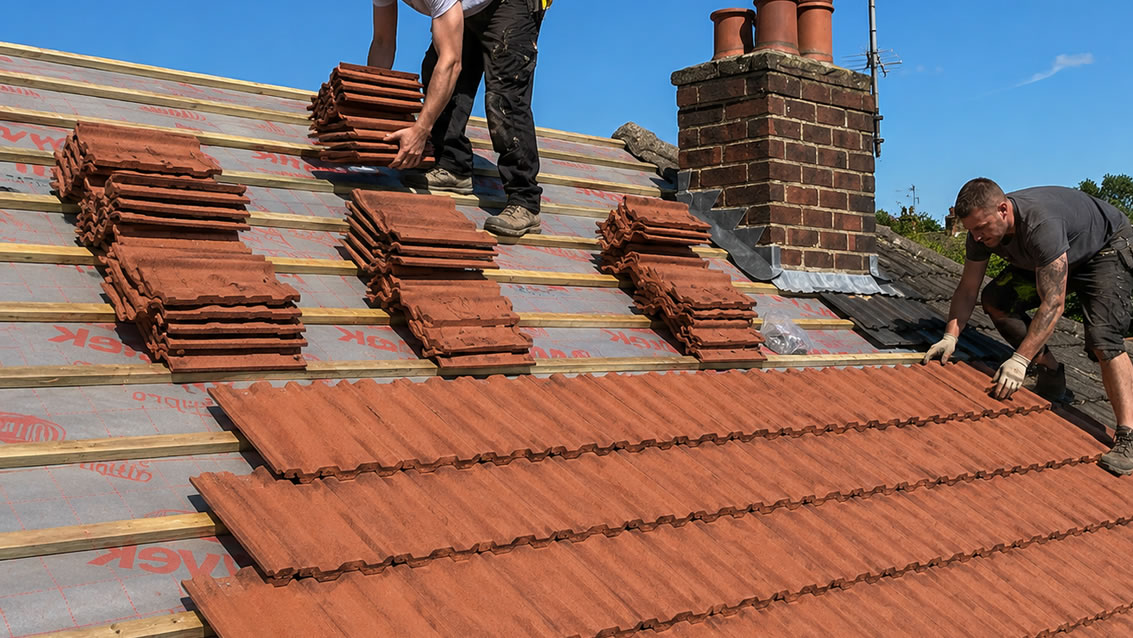
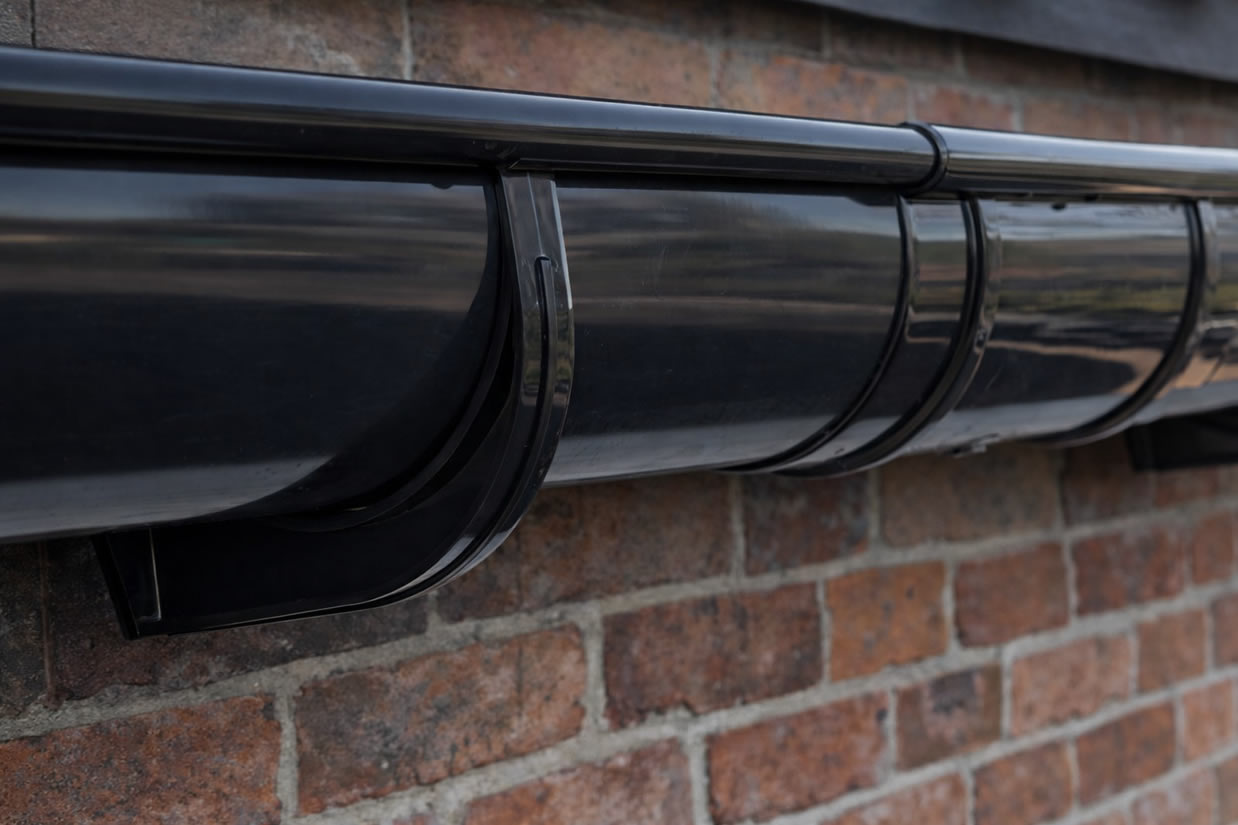
- repairing gutters, downpipes or roof coverings
- applying waterproof membranes or tanking systems
- improving ventilation and controlling condensation
- removing contaminated plaster and replastering walls
- repairing leaking pipes or drainage
- lowering external ground levels that bridge the damp-proof course
The correct treatment depends on the source of moisture. Therefore, homeowners should be cautious when a contractor recommends an injection treatment or replastering without explaining how the damp was diagnosed.
What are the main types of damp?
Most domestic damp problems fall into four broad groups: rising damp, penetrating damp, condensation and damp caused by leaks.
| Type of damp | Usual source | Common signs | Possible treatment |
|---|---|---|---|
| Rising damp | Ground moisture moving through porous masonry | Low-level tide marks, damaged skirting, crumbling plaster and salts | Remove bridging, install or repair DPC, remove salt-contaminated plaster |
| Penetrating damp | Rain entering through the roof, walls or openings | Localised patches that worsen after rain | Repair roof, flashing, render, pointing, gutters or seals |
| Condensation | Warm, moist air meeting a cold surface | Black mould, wet windows, damp corners and musty smells | Ventilation, heating, insulation and moisture management |
| Plumbing or drainage leak | Damaged pipe, appliance, shower, bath or drain | Localised damp, staining, dripping or persistent moisture | Find and repair the leak, then dry and restore the affected area |
| Below-ground moisture | Groundwater pressure against basement walls or floors | Wet cellar walls, flaking coatings and standing water | Cavity drainage membrane, tanking or other waterproofing system |
Condensation is described by the Property Care Association as the most common form of unwanted dampness in buildings. It forms when moisture held in the air condenses on colder surfaces.
Signs that your home may have a damp problem
Damp does not always appear as an obvious wet wall. Some symptoms develop gradually and may be mistaken for poor decoration or an isolated mould problem.
Common warning signs include:
- peeling or blistering paint
- wallpaper lifting from the wall
- dark, brown or yellow stains
- white powdery deposits on masonry or plaster
- mould around windows, ceilings or external corners
- soft, crumbling or hollow-sounding plaster
- damaged skirting boards
- a persistent earthy or musty smell
- cold or clammy walls
- mould returning soon after cleaning
- damp patches becoming worse during rain
- water collecting in a cellar or basement
A moisture meter reading alone does not necessarily prove that rising damp exists. A proper investigation should consider the pattern of moisture, construction of the building, external defects, ventilation, ground levels, plumbing and the condition of any existing damp-proof course.
Rising damp
Rising damp occurs when moisture from the ground travels upwards through porous masonry. A damp-proof course, or DPC, creates a barrier designed to prevent this movement.
Where the original barrier is absent, damaged or ineffective, a remedial damp-proof course may sometimes be installed. However, apparent rising damp may also be caused by a bridged DPC, high exterior ground levels, internal floor alterations or debris within a cavity.
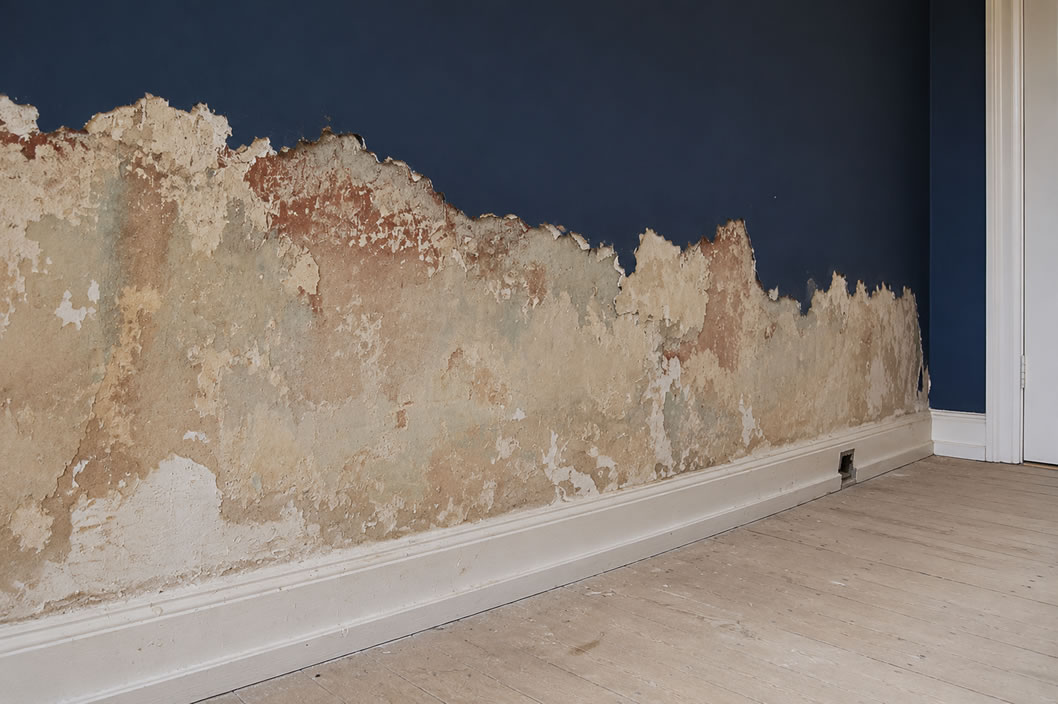
Typical signs of rising damp
Rising damp is normally found near the bottom of ground-floor walls. Possible signs include:
- dampness confined to the lower part of a wall
- a visible horizontal tide mark
- flaking paint and damaged plaster
- decaying skirting boards
- white salts appearing on the surface
- damage recurring after redecoration
Treating rising damp involves more than simply injecting a wall. The Property Care Association highlights two important parts of treatment: controlling the upward movement of water and dealing with salts that have accumulated in the wall or plaster.
Common rising damp treatments
| Treatment | What it involves | When it may be suitable |
| Removing a bridged DPC | Lowering soil, paving or render that crosses the DPC | When moisture bypasses an otherwise functional barrier |
| Chemical DPC injection | Drilling mortar joints and injecting cream, gel or fluid | When a suitable remedial barrier can be formed |
| Physical DPC | Cutting into masonry and installing a physical membrane | Specialist projects where disruption is acceptable |
| Replastering | Removing salt-contaminated plaster and applying a suitable replacement system | Where salts or deterioration would damage new decoration |
| Cavity clearance | Removing debris that bridges the cavity | When moisture passes across a blocked or contaminated cavity |
Cavity debris can bridge an existing damp-proof course. In that situation, removing the bridge may offer a better long-term solution than simply injecting another DPC.
Penetrating damp
Penetrating damp occurs when water enters a building horizontally or from above. It commonly becomes worse after rainfall and may appear at any height.
Potential causes include:
- cracked or missing roof tiles
- defective chimney flashing
- damaged exterior render
- eroded pointing
- leaking or overflowing gutters
- cracked downpipes
- failed window or door seals
- porous masonry
- blocked cavities
- defective parapet walls
- leaking balconies or flat roofs
Penetrating damp symptoms and likely faults
| Symptom | Possible source |
| Damp patch near ceiling | Roof covering, flashing or gutter failure |
| Damp around chimney breast | Flashing, pointing, chimney cap or flaunching |
| Damp below a window | Failed seal, sill or masonry joint |
| Patch that worsens after rain | Exterior defect or water penetration |
| Damp beside a downpipe | Split pipe, leaking joint or blocked drain |
| Isolated patch on an exposed wall | Cracked render, pointing or porous masonry |
The most effective repair usually involves correcting the exterior defect first. Internal coatings may hide the symptom temporarily, but they will rarely stop water entering through defective brickwork, roofing or rainwater goods.
Condensation and mould
Condensation happens when warm, moisture-laden air touches a colder surface. It frequently appears during colder months when windows remain closed and external walls become cooler.
Everyday activities add moisture to indoor air, including:
- cooking
- showering and bathing
- drying clothes indoors
- using an unvented tumble dryer
- running multiple occupants in a small property
- keeping rooms unheated
- blocking or disabling extractor fans
Typical signs include water on windows, black mould around frames, mould behind furniture and dampness in cold corners.
Condensation control options
| Measure | How it helps |
| Working extractor fans | Removes moisture from kitchens and bathrooms |
| Trickle vents or background ventilation | Provides controlled air exchange |
| Positive input ventilation | Introduces filtered air and may reduce internal humidity |
| Consistent background heating | Keeps surfaces warmer |
| Loft, wall or floor insulation | Reduces cold surfaces where condensation can form |
| Moving furniture away from cold walls | Improves air circulation |
| Venting tumble dryers externally | Prevents large moisture loads entering the room |
| Repairing failed seals and draughts | Helps maintain a more stable internal temperature |
Cleaning mould may be part of making a room safe and presentable, but it is not a complete solution where the moisture source remains.
Damp and mould can affect health, particularly for people with respiratory conditions, allergies, weakened immune systems, older people and young children. Government guidance emphasises that the underlying cause should be addressed rather than treating mould as a cosmetic issue.
Damp in basements and cellars
Rooms below ground level face different pressures from rooms above ground. Moisture may pass through walls and floors because the surrounding ground is wet and exerts pressure against the structure.
Two commonly discussed approaches are cementitious tanking and cavity drainage membranes.
| Basement system | How it works | Advantages | Considerations |
| Cementitious tanking | Waterproof coating bonds to prepared walls and floors | Can create a direct waterproof barrier | Preparation is critical; movement or defects can compromise it |
| Cavity drainage membrane | Studded membrane directs water to drainage channels and possibly a sump pump | Manages water rather than relying entirely on holding it back | Drainage and pumps require inspection and maintenance |
| External waterproofing | Waterproofing applied outside the structure | Stops water before it reaches the inner wall | Excavation can make it expensive or impractical |
| Combined system | Uses more than one form of protection | May provide greater resilience on difficult sites | Higher design and installation cost |
Basement waterproofing should generally be designed as a complete system. Treating one isolated patch may simply redirect the water to another part of the room.
Typical damp proofing costs in the UK
Damp proofing prices vary considerably because the phrase can describe anything from improving a bathroom extractor fan to waterproofing an entire basement.
Recent UK price guides provide very different averages depending on what is included. Checkatrade lists injection damp proofing at approximately £1,000–£3,000, a new DPC at about £2,500–£7,500 and a damp survey at roughly £300. MyBuilder suggests that many standard treatments fall between £500 and £2,000, although complicated work may cost substantially more.
The following figures are broad budgeting ranges rather than fixed quotations.
| Damp-related service | Typical UK budgeting range | What may affect the cost |
| Initial damp inspection | Free–£200 | Depth of inspection and whether it is linked to a quotation |
| Independent damp survey | £150–£500+ | Property size, testing and report detail |
| Localised penetrating damp repair | £200–£1,500+ | Source of leak, access and external repairs |
| Condensation treatment | £150–£1,500+ | Fans, ventilation system, insulation and room count |
| Chemical DPC treatment | £1,000–£3,000 | Wall length, thickness and access |
| Full remedial DPC project | £2,500–£7,500+ | Plaster removal, replastering and extent of treatment |
| External wall damp repairs | £500–£5,000+ | Render, pointing, scaffolding and wall area |
| Basement tanking | Around £125 per m² as a broad guide | Preparation, drainage and room dimensions |
| Larger basement waterproofing project | £4,000–£10,000+ | System design, pumps, drainage and finishes |
| Mould remediation | £500–£3,500 | Area, contamination and underlying repairs |
Independent damp survey guides commonly place survey costs between approximately £150 and £500, while the final price depends on property size and how detailed the investigation needs to be.
Why damp proofing prices vary
The largest price differences usually come from:
- the type and source of damp
- the size of the affected area
- whether plaster must be removed
- the thickness and construction of the walls
- access and scaffolding
- external repairs required
- whether floor coverings and skirting must be removed
- drying time and redecoration
- whether drainage or pumps are required
- regional labour rates
A quotation for DPC injection alone should not be compared directly with a quotation that includes stripping plaster, salt-resistant replastering, replacing skirting and decorating.
Damp proofing treatment comparison
| Treatment | Problem it targets | Disruption | Relative cost | Important limitation |
| Chemical DPC injection | Confirmed rising damp | Medium | ££ | Does not repair leaks or condensation |
| Repointing or render repair | Penetrating rain | Low–medium | £–£££ | Must use suitable materials for the building |
| Gutter or roof repair | Water penetration | Low–medium | £–££ | Internal finishes may still need drying and repair |
| Extractor fan or ventilation upgrade | Condensation | Low–medium | £–££ | Works best alongside suitable heating and insulation |
| Salt-resistant replastering | Contaminated internal finishes | High | ££ | The moisture source must also be controlled |
| Cementitious tanking | Below-ground water penetration | High | £££ | Preparation and continuity are critical |
| Cavity drainage system | Basement water management | High | £££ | Drainage channels and pumps may need maintenance |
| Surface mould treatment | Visible mould contamination | Low | £ | Does not solve the underlying moisture problem |
Do all damp walls need a new damp-proof course?
No. A new DPC is intended to control rising moisture from the ground. It is not the correct treatment for condensation, plumbing leaks, defective gutters or rain entering through external walls.
Before agreeing to injection work, ask the specialist to explain:
- why the damp has been diagnosed as rising damp
- whether an existing DPC is visible
- whether external ground levels bridge it
- whether cavity debris could be transferring moisture
- whether plumbing, gutters and rainwater pipes were checked
- how salts in the wall and plaster will be managed
- whether replastering is included
- how long the wall may take to dry
Older properties and breathable materials
Traditional buildings may contain solid brick or stone walls, lime mortar and lime plaster. These materials manage moisture differently from modern cavity-wall construction.
Applying hard cement render, waterproof coatings or non-breathable finishes without understanding the building can trap moisture and move the damp to another area.
A specialist inspecting an older home should consider:
- whether the wall is solid or cavity construction
- the original mortar and plaster
- exterior ground levels
- floor construction
- chimney and flue ventilation
- previous cement repairs
- impermeable paint or wallpaper
- local exposure to wind-driven rain
Breathability alone will not repair a leaking roof or pipe, but compatible materials can be important when restoring traditional walls.
Damp survey or free quotation: what is the difference?
A free contractor visit is often designed to establish whether the company can quote for treatment. This may be perfectly suitable for a straightforward problem.
An independent damp survey is more appropriate when:
- the cause is unclear
- several contractors have offered different diagnoses
- you are purchasing a property
- substantial structural or waterproofing work is proposed
- the damp has returned after previous treatment
- there may be a dispute involving a landlord, neighbour or builder
- you want advice from someone who is not selling the treatment
Survey options compared
| Survey type | Usually suitable for | Potential limitation |
| Free quotation visit | Straightforward visible defects and obtaining treatment prices | Surveyor may primarily assess work the company supplies |
| Paid contractor survey | More detailed diagnosis with a written specification | Check whether the fee is deducted from subsequent work |
| Independent damp survey | Complex problems, purchase decisions and conflicting diagnoses | Higher initial cost but may prevent unnecessary treatment |
| Building survey | Wider assessment of the whole property | May recommend further specialist investigation |
How to compare damp proofing quotes
Damp treatments can vary dramatically, so compare the proposed diagnosis and specification rather than the headline total alone.
| Quote item | Specialist A | Specialist B | Specialist C |
| Stated cause of damp | |||
| Evidence supporting diagnosis | |||
| Treatment area and measurements | |||
| DPC installation included | |||
| External defects repaired | |||
| Plaster removal included | |||
| Replastering specification | |||
| Skirting and fittings included | |||
| Waste removal included | |||
| Redecoration included | |||
| Guarantee details | |||
| Total including VAT |
A good quotation should state what caused the damp, what work will correct it and what remains excluded.
Questions to ask a damp proofing specialist
Before booking work, ask:
- What type of damp have you identified?
- What evidence supports that diagnosis?
- Could the problem be caused by a leak, gutter, render or ventilation?
- Is an existing DPC present, damaged or bridged?
- What preparation and replastering are included?
- How will salt-contaminated plaster be treated?
- How long should the wall take to dry?
- When can it be redecorated?
- What guarantee is provided?
- Is the guarantee backed by the installer only or by a separate insurer?
- Does the quote include VAT, disposal and making good?
Common damp proofing mistakes
Treating every low-level damp patch as rising damp
Low-level damp can result from leaks, bridged cavities, exterior ground levels, condensation or contaminated plaster. Diagnosis should come before treatment.
Painting over damp
Stain-blocking paint may improve appearance temporarily, but moisture can return if the source remains.
Injecting a DPC without addressing salts
Walls affected by rising moisture can contain salts that continue attracting moisture. The plaster specification may be as important as the injected barrier.
Installing ventilation without checking external leaks
Ventilation can help condensation but will not stop penetrating rain or leaking pipes.
Fitting internal tanking to one isolated patch
Water may track behind or around an incomplete waterproof barrier. Below-ground systems should be designed continuously.
Replastering too soon
Walls can take time to dry after moisture has been controlled. Applying unsuitable finishes too early may cause staining, bubbling or mould to return.
Damp in rented homes
Tenants should report damp and mould promptly and keep a written record, including dated photographs. Landlords should investigate the underlying reason rather than placing responsibility entirely on everyday activities.
Government guidance covers the health risks of damp and mould and the steps social and private landlords should take to address and reduce them.
In England, additional enforcement powers introduced on 22 June 2026 allow councils to issue fines of up to £7,000 where landlords fail to address serious hazards, including severe damp and mould.
Can you damp proof a home yourself?
Some preventative measures are suitable for homeowners, such as:
- clearing blocked gutters at safe ground-level access
- using extractor fans
- keeping air vents open
- wiping condensation from windows
- moving furniture away from cold walls
- monitoring plumbing fixtures for leaks
- maintaining consistent background heating
However, DIY chemical injection is risky when the cause has not been established. Incorrect drilling, unsuitable products, incomplete treatment or failure to deal with plaster salts can leave the original problem unresolved.
Roof work, extensive mould remediation, structural repairs, asbestos-containing finishes and basement waterproofing are normally better handled by appropriate specialists.
How long does damp proofing take?
The treatment itself may be relatively quick, but the full project can take longer because of plaster removal, replastering and drying.
| Work type | Typical working time | Additional considerations |
| Small ventilation improvement | A few hours to one day | Humidity improvement may take time |
| Local penetrating damp repair | One day to several days | Depends on roof, render or masonry work |
| DPC injection to a limited wall | One to two days | Plaster and drying extend the project |
| Multi-room rising damp treatment | Several days to two weeks | Furniture, skirting and finishes may be affected |
| Basement waterproofing | One to several weeks | Drainage, pumps, plastering and flooring add time |
Drying may continue for weeks or months. The contractor should explain when decoration can safely begin and which paints or finishes are suitable.
Is damp proofing worth the cost?
Correctly targeted damp work can protect plaster, decoration, timber, insulation and the wider structure of a home. More importantly, it can improve the condition of rooms affected by mould and excessive moisture.
However, value depends on choosing the correct solution. Paying for a detailed survey can be worthwhile where the diagnosis is uncertain or several expensive treatments have been proposed.
Get damp proofing quotes from local specialists
Damp can have several overlapping causes, so a clear inspection and written specification matter. When requesting quotes, describe:
- where the damp appears
- how high it reaches
- whether it changes after rain
- whether mould or salts are present
- the age and type of property
- any recent roofing, plumbing or renovation work
- previous damp treatments
- photographs of the affected area and exterior wall
Find Me Quotes can help you request damp proofing quotes from local specialists. Comparing more than one assessment can help you understand the likely cause, available treatments and total cost before committing to major work.
Frequently asked questions about damp proofing
What is the most common type of damp in UK homes?
Condensation is widely regarded as the most common form of unwanted dampness. It occurs when humid indoor air meets cold surfaces and may cause wet windows, black mould and musty smells.
How do I know whether I have rising damp?
Possible signs include low-level moisture, damaged skirting, salts and a horizontal tide mark. However, these signs can have other causes, so a proper investigation should check ground levels, leaks, cavities and the existing DPC.
How much does damp proofing cost?
Small treatments may cost a few hundred pounds, while DPC installation, extensive replastering or basement waterproofing can cost several thousand pounds. The correct price depends on the diagnosis, affected area and work included.
Will a chemical damp-proof course stop penetrating damp?
No. A chemical DPC is intended to control moisture rising from the ground. Penetrating damp requires repair of the roof, wall, gutter, flashing, seal or other point where rain enters.
Does damp plaster always need to be removed?
Not always. However, deteriorated or salt-contaminated plaster may need removal and replacement. The surveyor should explain why replastering is required and specify the proposed system.
Can I paint over damp once it looks dry?
Decoration should wait until the moisture source has been corrected and the wall has dried sufficiently. Using unsuitable paint too early can trap moisture or cause the finish to fail.
Do damp-proofing guarantees transfer to a new owner?
Some do, but terms vary. Check whether the guarantee belongs to the property, whether it must be formally transferred and whether an administration fee applies.
Will opening windows cure condensation?
Opening windows can help, but it may not be enough. Effective control can involve extractor fans, background ventilation, appropriate heating and insulation, as well as reducing excessive moisture production.