

If you have looked at roofing quotes recently and thought the numbers seemed far higher than they used to be, you are not imagining it. Roofing prices in the UK have moved up sharply over the last decade, and the change has been much bigger than many homeowners expect.
Ten years ago, many people still viewed roofing as a relatively straightforward trade cost: materials, labour, scaffolding, job done. Today, the picture is more complicated. Roof replacement, major repairs, flat roofing and leadwork have all become more expensive, and in some cases the increase feels dramatic.
So how much have roofing prices actually changed in 10 years? The short answer is that many common roofing jobs now cost roughly 40% to 80% more than they did a decade ago, and some specialist or access-heavy jobs have risen even more. The exact increase depends on the type of roof, the material, the region and how much scaffolding or remedial work is involved.
In this guide, we look at how roofing prices have changed, why they have risen, and which factor has had the biggest effect on today’s quotes.
Roofing prices have gone up a lot — but not all by the same amount
There is no single percentage increase that applies to every roofing job. A small repair has not risen in exactly the same way as a full slate reroof. Likewise, a flat roof replacement has not moved in exactly the same way as chimney leadwork or ridge tile repairs.
However, as a broad guide, roofing prices today are usually noticeably higher than they were in the mid-2010s.
That rise shows up in areas such as:
- full roof replacements
- flat roof repairs and replacements
- lead flashing work
- slate roofing
- roof valley repairs and replacement
- chimney work
- ridge tile repairs
- general roof leak repairs
In practice, homeowners often feel the biggest jump on larger jobs. A roof replacement that may once have seemed like a £5,000 to £6,000 project can now look more like a £7,500 to £10,000 job, depending on property size and materials. Likewise, flat roofing, which many people still think of as the cheaper end of roofing, has also become significantly more expensive when modern materials, insulation and decking work are included.
A rough 10-year comparison
The exact numbers vary by property and region, but the table below gives a realistic homeowner-level view of how prices have shifted.
| Roofing Job | Around 10 Years Ago | Typical Range Now | Approximate Change |
|---|---|---|---|
| Minor roof repair | £100 to £250 | £150 to £400+ | Up roughly 40% to 60% |
| Ridge tile repair | £150 to £300 | £225 to £550 | Up roughly 40% to 80% |
| Chimney flashing repair | £200 to £500 | £250 to £1,200 | Up roughly 25% to well over 100% depending on access |
| Flat roof replacement | £1,500 to £4,500 | £2,800 to £7,500 | Up roughly 40% to 70% |
| Full roof replacement | £4,500 to £9,000 | £8,000 average, often £4,000 to £19,000 overall | Up materially, especially on larger roofs |
| Slate roof work | Higher than tile even then | Still among the most expensive roofing work | Higher again because both labour and materials cost more |
These are not fixed national tariffs. They are practical comparison ranges based on the direction of UK pricing rather than a single official roofing index. The real point is simple: roofing has become much more expensive over the last decade, and the rise has outpaced what many homeowners think of as “normal inflation”.
Why have roofing prices risen so much?
Roofing prices have not climbed for one reason alone. Instead, several pressures have stacked on top of each other.
1. Material prices rose sharply
This is the factor most people notice first. Roofing depends heavily on products such as tiles, slates, underlay, battens, lead, membranes, insulation, fascias, fixings and sealants. Once material prices rose across construction, roofing quotes rose with them.
During and after the pandemic, supply chains tightened badly. Since then, merchants and trade bodies have continued to report material price pressure, including further increases linked to energy, transport and raw materials.
For homeowners, that means the roof itself simply costs more before a roofer has even started fitting it.
2. Labour costs kept rising
Roofing is skilled, physical work, and it depends heavily on experienced labour. Over the last decade, labour costs have increased steadily, and that matters because roofing is not just a materials job. It is a labour-heavy trade.
A reroof involves stripping, lifting, sorting, preparing, repairing, fitting, finishing and clearing away. Even small repairs often require a skilled roofer, a mate, and sometimes specialist leadwork or slate knowledge.
As labour became more expensive across construction, roofing followed. In many areas, especially where good roofers are busy, labour now makes up a very large share of the quote.
3. Scaffolding and access now bite harder
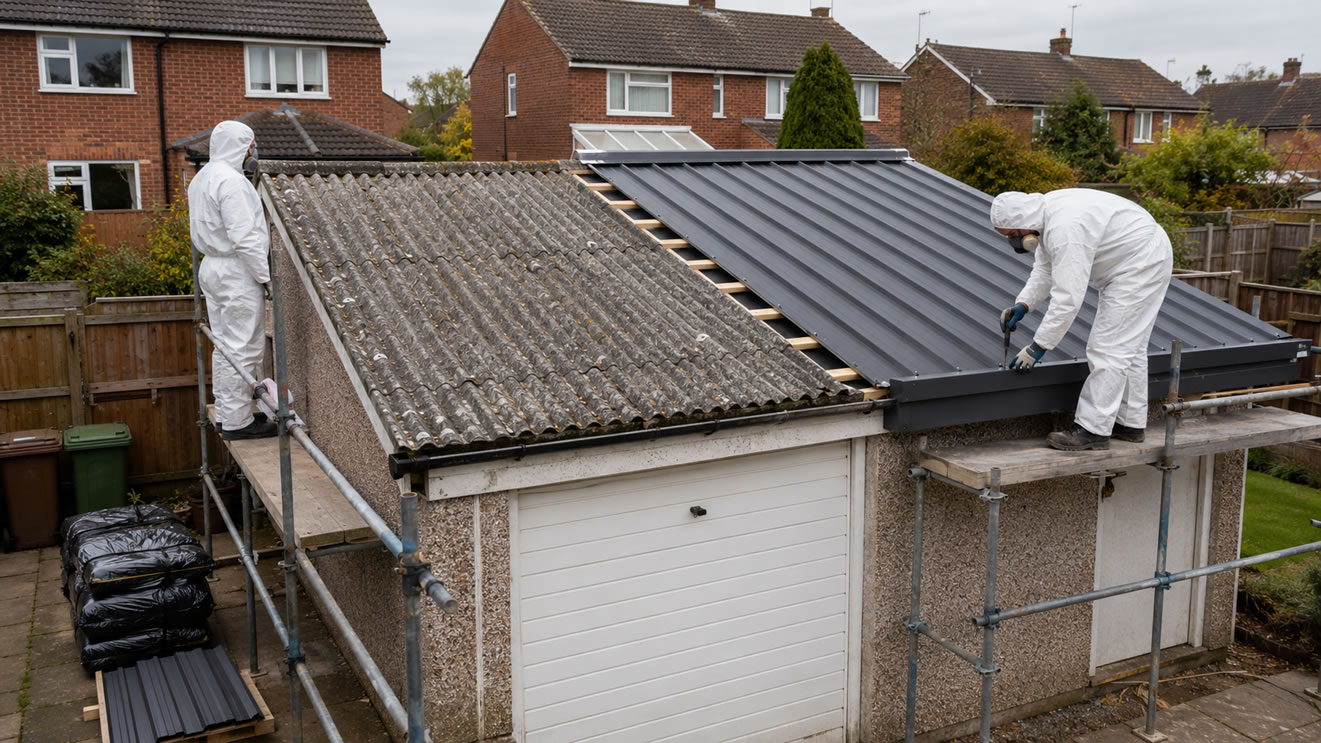
Many homeowners underestimate how much access changes the final figure. A low garage roof and a steep two-storey slate roof do not just use different materials. They create very different labour and safety demands.
Scaffolding, access towers, edge protection, awkward entrances, narrow streets and height restrictions all add cost. Over the last decade, access-related costs have risen alongside labour and compliance expectations.
That is why two apparently similar jobs can come in with very different prices.
4. Roofing jobs now include more than they used to
Ten years ago, some roofing jobs were priced more narrowly. Today, roofers and homeowners are both more aware that a proper quote often needs to include the full build-up, not just the visible outer layer.
That can mean:
- replacing rotten decking under flat roofs
- renewing breathable membrane under pitched roofs
- replacing battens
- improving insulation
- renewing lead flashings
- repairing chimneys and valleys at the same time
- disposing of more waste properly
As a result, many quotes now cover work that used to be left out, postponed or discovered halfway through the job.
5. Energy, transport and supply disruption all fed into the price
Roofing materials do not arrive on site in a vacuum. They are manufactured, stored, transported and handled through a wider construction supply chain. When fuel, energy and freight costs rise, roofing prices tend to rise too.
This was especially obvious after 2020, when supply chain shocks and construction inflation pushed many building costs sharply upward. Even where inflation has cooled since then, roofing prices have not dropped back to where they were.
What is the main factor behind the price change?
If you had to name one main factor, the best answer is this:
The biggest driver has been the combined rise in materials and labour, with labour now playing the biggest ongoing role in many roofing quotes.
That sounds like two factors, but in roofing they are tightly linked. Materials created the sharp shock. Labour kept the floor high.
In simple terms:
- materials caused a big step-up in roofing costs, especially from 2020 onward
- labour is the reason many roofing quotes have stayed high rather than falling back
If you want one single homeowner-friendly way to think about it, this is probably the clearest:
The main reason roofing costs more today is that every part of the job costs more at the same time — the materials, the labour, the access and the supporting work around it.
However, if you force the answer down to one line, skilled labour plus installation time is now the biggest long-term cost driver on many roofing jobs, while materials were the biggest shock factor in the decade.
Which roofing jobs have risen the fastest?
Not every roofing service has moved at the same pace.
The jobs that have often seen the biggest jumps are:
- leadwork and flashing repairs, because lead and skilled labour both cost more
- slate roofing, because it is specialist and labour-intensive
- flat roof replacement, because modern systems often include better materials and upgraded build-ups
- high-access repair work, because scaffolding can transform the total job cost
- partial reroofs that uncover hidden defects, because decking, underlay and battens may all need replacing once opened up
By contrast, very small basic repairs have also gone up, but the pound-note increase is easier to absorb. A roof tile repair that rises from £180 to £300 feels different from a full reroof that rises from around £6,000 to around £9,500.
Why homeowners feel the increase more now
The rise in roofing prices stands out for a few reasons.
First, roofing is usually a distress purchase. Most people do not replace a roof because they fancy an upgrade. They do it because something is leaking, failing or worn out. That makes any price increase feel more painful.
Second, roof work often comes with hidden extras. A homeowner may ask for one thing and discover they also need:
- new membrane
- new battens
- chimney repointing
- lead flashing renewal
- valley repairs
- guttering work
- timber replacement
Third, roofs are large building elements. Even a modest percentage rise has a big effect once it applies to a job worth several thousand pounds.
Have roofing prices risen more than normal inflation?
In many cases, yes.
General UK inflation explains some of the increase over 10 years. However, roofing has also been hit by sector-specific pressures: material shortages, construction inflation, labour shortages, energy-heavy manufacturing, higher transport costs and access costs.
That is why roofing quotes can feel as though they have moved faster than ordinary household prices. In many real-life cases, they have.
Will roofing prices keep rising?
Probably yes, although not at the same pace seen during the biggest supply-chain shocks.
It would be unrealistic to expect roofing costs to return to mid-2010s levels. Materials may fluctuate and competition may vary by region, but the overall base cost of roofing now sits higher than it did ten years ago.
Going forward, the biggest pressures are likely to be:
- labour shortages
- wage growth
- material cost increases
- energy and transport costs
- regulatory and compliance expectations
- ongoing demand for repairs to ageing housing stock
That means most homeowners should assume roofing will remain expensive rather than waiting for prices to “go back to normal”.
What can homeowners do about it?
You cannot control market prices, but you can improve the way you approach the quote.
A few practical steps help:
- get more than one quote
- compare like with like
- ask exactly what is included
- check whether scaffolding is included
- ask whether hidden timber or underlay work is excluded
- compare repair versus replacement honestly
- deal with problems early before water damage spreads
- do not choose on price alone if the scope is unclear
The cheapest quote is not always the cheapest job once missing items are added back in.
Final thoughts
Roofing prices in the UK have changed a lot over the last ten years. For many common jobs, the increase is now substantial enough that homeowners really do notice it straight away.
As a practical rule of thumb, many roofing jobs now cost around 40% to 80% more than they did a decade ago, and some specialist or scaffold-heavy jobs have risen by even more. The main reason is not one single issue in isolation. Instead, roofing has been hit by higher material costs, higher labour costs, more expensive access, and a broader expectation that proper quotes include more of the roof build-up than they once did.
If you are planning roofing work now, the smartest move is not to guess. It is to compare quotes properly, ask the right questions and understand exactly what today’s price includes.
Get roofing quotes
If you are researching current roofing costs and want a clearer idea of what the work would cost on your own home, use the quotation form on this page to compare quotes from local roofing specialists.
Frequently asked questions
Have roofing prices really gone up that much in 10 years?
Yes. In broad terms, many common roofing jobs now cost around 40% to 80% more than they did a decade ago, and some specialist jobs have risen by even more.
What is the main reason roofing prices have gone up?
The main reason is the combined rise in materials and labour. Materials caused a sharp jump, especially after 2020, while labour keeps many roofing quotes high today.
Have roofing prices risen faster than normal inflation?
In many cases, yes. General inflation explains part of the change, but roofing has also been hit by construction-specific pressures such as material shortages, labour shortages and higher access costs.
Which roofing jobs have risen the most?
Leadwork, slate roofing, flat roof replacement and high-access repairs have often seen some of the sharpest increases.
Why do roofing quotes vary so much?
They vary because roof size, materials, access, scaffolding, hidden damage and regional labour costs can all change the final figure.
Will roofing prices come down again?
Small fluctuations are possible, but a return to mid-2010s roofing prices is unlikely. The underlying cost base of roofing is now much higher.
Is labour or materials the bigger cost driver?
Materials created much of the sharp rise, but labour is now one of the biggest ongoing drivers in many roofing quotes.
Should I repair now or wait?
If the roof is already leaking or failing, waiting often makes the job more expensive because water damage can spread into the structure below.