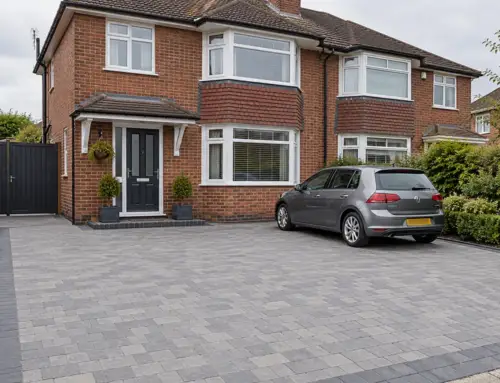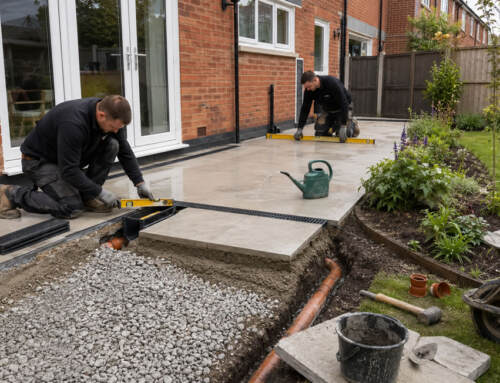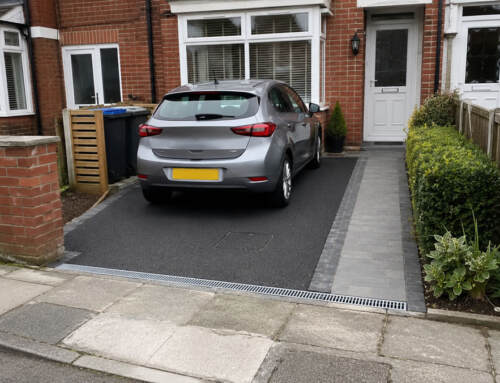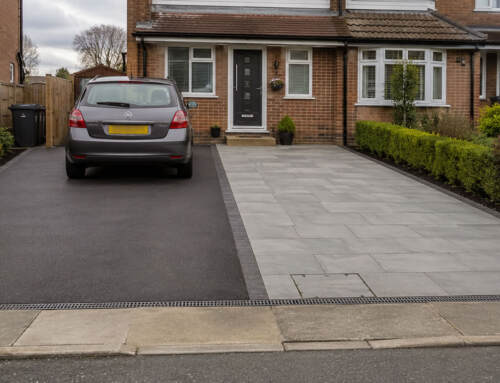


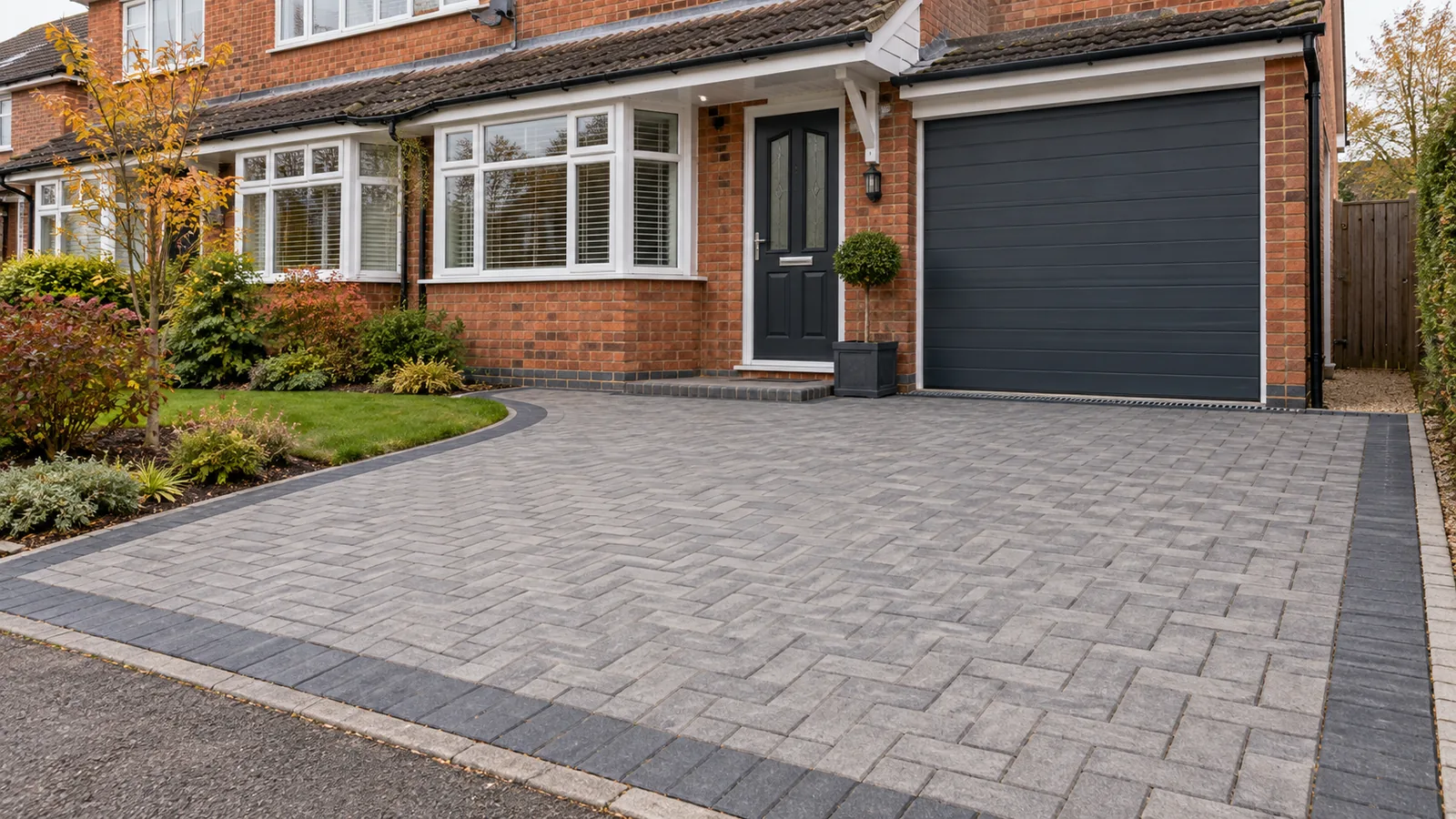
Featured image: AI-generated illustration.
Good driveway installation quotes explain what happens below the surface as clearly as they describe the finish. Before comparing totals, check that each contractor has priced the same area, ground preparation, drainage, edging and waste removal. A cheaper quote may be perfectly reasonable, but an unexplained omission makes it difficult to judge value.
This guide helps UK homeowners turn several different proposals into a fair comparison. It focuses on the work and terms to agree before booking, rather than headline prices that may bear little resemblance to your property.
What should driveway installation quotes include?
Ask for a written specification alongside the total price. A description such as “new driveway, all materials included” leaves too much open to interpretation. You need to know which materials, how much preparation and what happens when the contractor encounters an unexpected problem.
| Part of the job | What to request in writing | Why it matters |
|---|---|---|
| Area and layout | Measured area in m², boundaries, parking layout and any adjoining path | Different measured areas can make totals misleading |
| Removal and excavation | Old surface removal, proposed excavation and disposal arrangements | A surface overlay is a different job from rebuilding the driveway |
| Foundation | Sub-base material, proposed thickness and compaction method | The supporting layers must suit the ground and vehicle use |
| Finished surface | Named product or material, colour, pattern and installation specification | Similar-looking finishes may use different systems |
| Drainage and levels | Water route, falls, drainage components and any tests or design work | A channel alone does not explain where the water goes |
| Edges and making good | Edging, steps, thresholds, wall interfaces and reinstatement | Small finishing details can otherwise become extras |
| Commercial terms | Total, VAT treatment, exclusions, payments, timescale and guarantee | You can compare the actual commitment, not just the headline |
Request the final amount payable in pounds, with VAT included where applicable. If a contractor is not VAT registered, ask them to make that clear. Check how long the quotation remains valid and whether any allowances are provisional rather than fixed.
Check preparation before choosing the finish
Is this a rebuild or an overlay?
A proposal to lay a new finish over the existing base should explain why that base is suitable. Ask how the contractor assessed movement, cracking, levels and drainage. An overlay should not be treated as equivalent to a quote that removes the old construction and starts again.
For a rebuild, request the proposed excavation depth and the specification for the supporting layers. Avoid choosing a universal depth from an online checklist: ground conditions, loading and the surfacing system affect the design. Tell the contractor if the drive will carry a heavy van or frequent deliveries rather than only a small car.
Where will rainwater go?
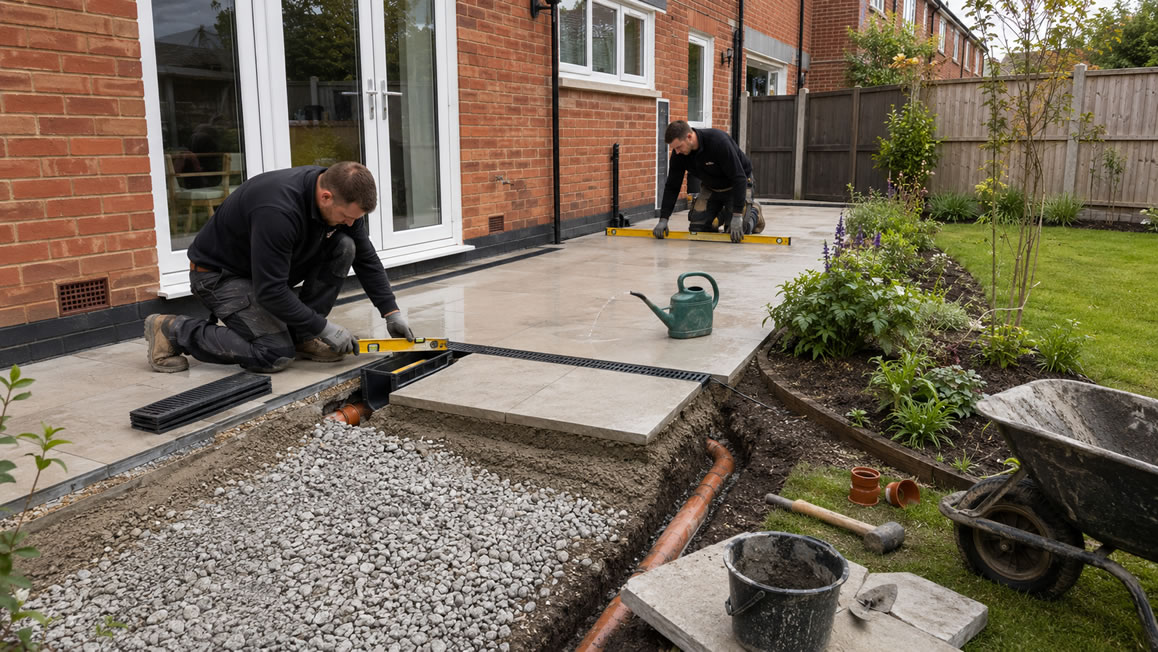
A drainage proposal should describe the whole route, from the surface to its destination. Ask who checks ground suitability and whether any soakaway, drainage connection or additional investigation is included.
The government guide to permeable front-garden surfacing explains that a permeable driveway needs suitable supporting construction, not simply a surface that lets water through. Conventional sub-base materials and those used in permeable systems differ. Ask the installer to identify the complete system in the quote.
Photograph any existing ponding and show it during the survey. Include nearby garage doors, air bricks, house thresholds and neighbouring boundaries in the discussion. For adjoining outdoor areas, our guide to preventing standing water on patios explains why levels and drainage deserve attention early.
Who checks permissions and access?
For houses in England, Planning Portal’s front-garden guidance says permission is generally needed for an impermeable area over five square metres unless runoff goes to a permeable area. Permeable surfacing or natural drainage to a lawn or border can avoid that requirement, subject to applicable restrictions.
This is England-specific guidance; confirm the position with the relevant authority in Wales, Scotland or Northern Ireland. Flats, listed properties and restricted permitted development rights need particular care. A new or altered dropped kerb is a separate matter to check with the highway authority. Record who will obtain approvals and whether fees or highway works are excluded.
Compare the same driveway specification
Decide on your essential requirements before collecting prices. When you contact driveway installation specialists through My Driveway Prices, use the same brief for each contractor. The site introduces enquiries to independent businesses; availability and responses can vary, and you agree the work directly with your chosen installer.
Keep alternatives separate. For example, ask for one price for your preferred surface and a clearly labelled alternative for another finish. Our guide to asphalt versus paving slabs can help with the initial material comparison, but a site-specific specification is still needed.
A practical comparison example
Imagine two quotes for the same front drive. One includes excavation, new edging, drainage work and removal of all spoil. The other describes resurfacing and retaining the existing edges, with drainage “if required”. These are different scopes, even if both promise an attractive finish.
Ask the second contractor to confirm the drainage arrangement and price any necessary extra work. Ask the first whether rebuilding is essential and what evidence supports that recommendation. The aim is to understand the difference, rather than automatically choosing the more expensive proposal.
You can divide comparable installed totals by the same measured area to obtain a £/m² figure. Use it as a cross-check, not a verdict: fixed costs, access difficulties and drainage works do not increase evenly with area. A detailed total is more useful than a bare rate per square metre.
Check the contractor and the payment terms
Ask who will carry out the work, who supervises it and who you contact if something needs attention afterwards. Request evidence of current public liability insurance and examples of comparable installations. With the owner’s permission, an older driveway can help you assess how the finish has weathered; a recent photograph shows less about long-term performance.
Citizens Advice’s guidance before building work recommends written quotations and a written agreement, along with checks on the trader and insurance. Use the appropriate country version of its advice when checking consumer rights.
Agree these details before accepting:
- Payments: the deposit, what it covers, later stages and when the balance becomes due.
- Changes: how unforeseen ground problems or additional work will be documented and priced before proceeding.
- Access: parking arrangements, deliveries, machinery access and protection of surrounding areas.
- Timing: expected start and duration, weather delays and when vehicles can use the finished drive.
- Guarantee: the provider, duration, covered defects, exclusions and claim process.
- Handover: care instructions, inspection, outstanding items and final waste clearance.
A workmanship guarantee and a product guarantee cover different things. Ask for both sets of terms where offered, including any maintenance conditions. Treat pressure to commit immediately as a reason to pause and review the paperwork.
How to prepare a brief for driveway quotations
You need a phone or camera and a notebook or notes app. This is a preparation checklist for a professional survey; it does not require digging, drainage testing or entering the highway.
- Record the existing layout. Take photographs from safe positions, noting boundaries, gates, thresholds, visible damage and where water collects.
- Describe how the drive is used. List the vehicles, parking spaces, pedestrian access and any requirement for bins, mobility aids or deliveries.
- State the preferred finish. Describe the material and appearance you want, while inviting a separately priced alternative if suitable.
- List questions for the survey. Ask about the existing base, drainage destination, approvals, access and what investigations are needed.
- Send the same brief to each contractor. Request written specifications, exclusions and payment terms, then resolve differences before comparing totals.
Frequently asked questions
Do I need a site visit before accepting a driveway quote?
A site visit is normally useful because photographs may not reveal ground conditions, level differences or machinery access. Ask whether a remote price is provisional and what could change after inspection.
Should waste removal be included?
It should be explicitly included or excluded. Confirm who removes the old surface and excavated material, whether skip costs are covered and what condition the site will be left in.
Is the cheapest driveway quote always poor value?
No. A lower price can reflect a simpler design or an efficient contractor. Compare the scope, materials, drainage and terms before deciding whether the saving is meaningful.
Does a permeable surface remove every planning concern?
No. The complete drainage design, property type, local restrictions and associated work still matter. Check the applicable requirements with your planning and highway authorities before work begins.
What if extra excavation is needed after work starts?
Use the agreed variation process. Ask for the reason, revised specification and additional price in writing, and agree the change before the extra work proceeds.
Choose the clearest complete proposal
Start with the same brief, arrange the necessary surveys and compare written proposals line by line. Resolve uncertain drainage, preparation or payment terms before you book. A contractor who can explain the specification clearly gives you a stronger basis for deciding whether the price suits your project.