

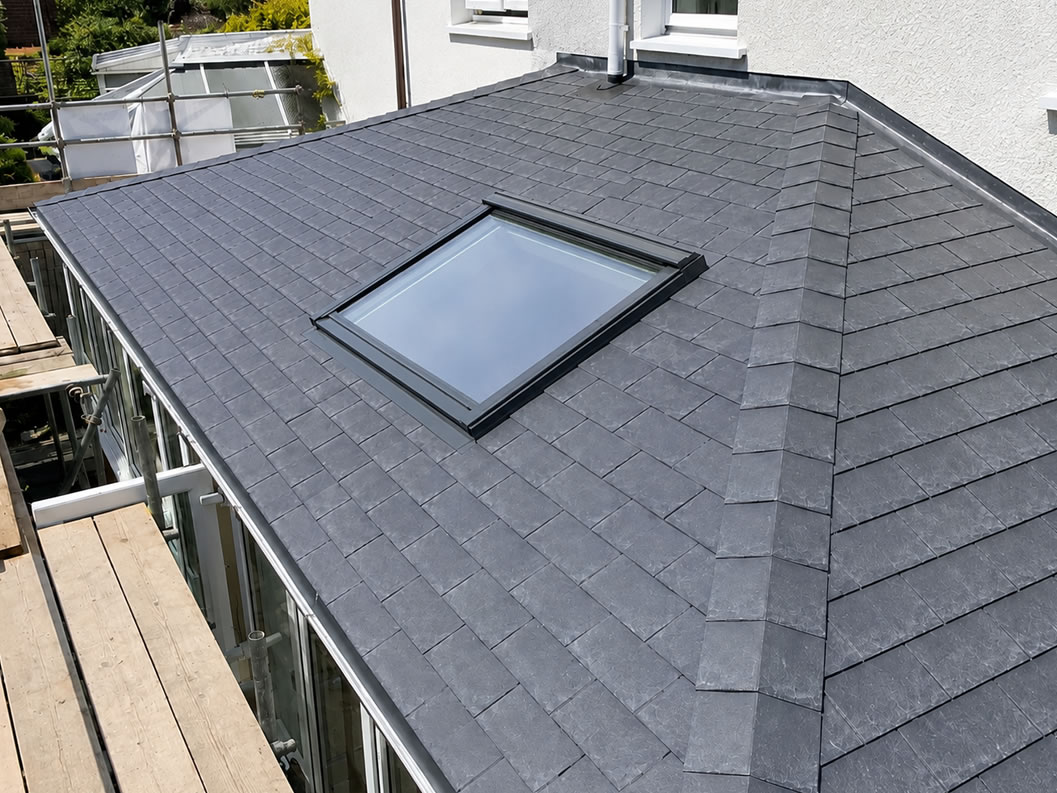
Tile and slate are two of the most common pitched-roof coverings used on UK homes. Both can provide long-lasting protection, but they differ considerably in cost, weight, appearance, repair methods and expected lifespan.
Concrete and clay roof tiles are widely available and can suit everything from modern housing estates to period cottages. Slate creates a thinner, more traditional roof covering and can last for generations when good-quality material is installed correctly.
The best option is not always the material with the longest potential lifespan. Homeowners also need to consider the roof pitch, supporting structure, local planning requirements, availability of matching materials and the cost of skilled labour.
For repairs, retaining the existing material is normally the simplest approach. During a full replacement, however, there may be an opportunity to reuse sound slates, switch from concrete tiles to a lighter covering or choose a new material that better suits the property.
This guide compares tile and slate roofs for repairs and complete replacement, including the advantages, disadvantages and typical UK costs.
Tile vs Slate Roof at a Glance
| Feature | Roof Tiles | Roof Slate |
|---|---|---|
| Main materials | Concrete or clay | Natural or artificial slate |
| Typical appearance | Profiled, flat or plain | Thin, flat and uniform |
| Material cost | Usually lower | Natural slate usually higher |
| Labour cost | Often lower | Usually higher |
| Weight | Concrete tiles can be heavy | Natural slate is often relatively light |
| Potential lifespan | Around 40–100+ years | Around 50–150+ years |
| Repair difficulty | Usually straightforward | Needs more specialist skill |
| Matching replacements | Often easy for modern tiles | Can be difficult for old slate |
| Fragility during access | Varies | Slate can crack if walked on |
| Minimum pitch | Depends on product | Depends on slate size and headlap |
| Heritage suitability | Clay and plain tiles can suit period properties | Natural slate often ideal |
| Colour range | Wide | More limited natural colours |
| Reuse potential | Possible | Natural slate often highly reusable |
| Installation speed | Often faster | Usually slower |
| Roof structure | Must suit selected tile weight | Must suit slate fixing and loading |
What Is a Tiled Roof?
A tiled roof uses overlapping clay or concrete units fixed to timber battens.
Common types include:
- Interlocking concrete tiles
- Interlocking clay tiles
- Plain clay tiles
- Concrete plain tiles
- Pantiles
- Roman tiles
- Double Roman tiles
- Flat tiles
- Profiled tiles
- Handmade clay tiles
The tiles form the main weatherproof covering. Roofing underlay beneath them provides secondary protection against wind-driven rain and snow.
What Is a Slate Roof?
A slate roof uses thin overlapping pieces fixed to battens or roof boarding.
The main options are:
- Natural slate
- Artificial slate
- Fibre-cement slate
- Reclaimed slate
- Imported natural slate
- British slate
Natural slate is split from stone. Each piece may vary slightly in colour, texture and thickness.
Artificial slate is manufactured to provide a more consistent size and appearance. It usually costs less than high-quality natural slate, although its lifespan may be shorter.
Concrete Tiles vs Clay Tiles vs Slate
| Covering | Typical Character | Broad Potential Lifespan |
| Concrete interlocking tile | Affordable and widely used | 40–60 years or more |
| Clay interlocking tile | Durable with strong colour retention | 50–100 years or more |
| Clay plain tile | Traditional appearance and many overlaps | 60–100 years or more |
| Natural slate | Thin, durable and highly reusable | 75–150 years or more |
| Artificial slate | Uniform and relatively affordable | 30–60 years |
| Fibre-cement slate | Lightweight manufactured slate | 30–50 years |
These are broad expectations rather than guarantees. Installation quality, slate or tile grade, roof exposure and maintenance all affect performance.
Which Roof Lasts Longer?
A high-quality natural slate roof generally has the greatest potential lifespan.
However, the complete roof includes more than the visible covering.
Other components may fail sooner, including:
- Nails
- Hooks
- Battens
- Roofing underlay
- Flashing
- Valleys
- Ridge tiles
- Timber decking
- Roof windows
- Mortar
- Dry-fix components
An old slate roof may therefore need stripping and refixing even though many original slates remain usable.
Clay tiles can also last for many decades, particularly when they retain their strength and surface finish.
Concrete tiles often provide a good working lifespan, although their surface may weather or lose colour before the tile itself becomes unusable.
Natural Slate Longevity
Natural slate does not rot and has very low water absorption when it is of suitable quality.
A slate roof can last for generations where:
- The correct slate grade is used
- Fixings resist corrosion
- Headlaps are adequate
- Battens remain dry
- Roof pitch is suitable
- Foot traffic is limited
- Flashing and valleys are maintained
The slate may outlast the fixings beneath it.
Roof Tile Longevity
Tile lifespan varies according to material.
Concrete roof tiles
Concrete tiles can remain functional for many decades. Surface colour may fade, but fading alone does not mean the roof has failed.
Clay roof tiles
Good clay tiles can last considerably longer. However, poor-quality or unsuitable clay may suffer frost damage, flaking and cracking.
Plain tiles
Plain tiles use more individual units and greater overlap. They create a traditional appearance but need more labour to install and repair.
Which Is More Expensive?
Natural slate is generally more expensive than standard concrete or clay interlocking tiles.
The higher cost comes from:
- Slate material prices
- More pieces per square metre
- Sorting and grading
- Skilled labour
- Individual fixing
- Slower installation
- More careful handling
- Specialist detailing
- Greater breakage allowance
Artificial slate can reduce the difference, although it does not offer the same lifespan or appearance as premium natural slate.
Typical Tile and Slate Roof Replacement Costs
The following figures provide broad UK budgeting ranges.
| Roof Replacement | Typical UK Cost |
| Small tiled porch roof | £1,500–£4,000 |
| Small slate porch roof | £2,000–£5,000 |
| Terraced concrete tile roof | £6,000–£11,000 |
| Terraced clay tile roof | £7,000–£13,000 |
| Terraced artificial slate roof | £7,000–£13,000 |
| Terraced natural slate roof | £9,000–£17,000 |
| Semi-detached concrete tile roof | £8,000–£15,000 |
| Semi-detached clay tile roof | £10,000–£18,000 |
| Semi-detached natural slate roof | £13,000–£25,000 |
| Detached concrete tile roof | £12,000–£25,000 |
| Detached clay tile roof | £15,000–£30,000 |
| Detached natural slate roof | £20,000–£40,000 or more |
| Reusing existing natural slate | Often less than all-new slate |
| Complex heritage slate roof | £30,000–£60,000 or more |
Roof shape, access, scaffold costs, slate type and structural repairs can move prices outside these ranges.
Approximate Costs Per Square Metre
| Covering | Broad Installed Replacement Cost |
| Standard concrete tiles | £90–£150 per m² |
| Interlocking clay tiles | £110–£180 per m² |
| Clay plain tiles | £130–£220 per m² |
| Artificial slate | £110–£190 per m² |
| Natural slate | £150–£280 per m² |
| Premium or heritage slate | £220–£400+ per m² |
These figures may include underlay and battens but not always scaffolding, structural work, insulation, leadwork or internal repairs.
Why Natural Slate Costs More to Install
A slate roof normally uses more individual pieces than a large interlocking tile roof.
The roofer may need to:
- Sort slates by thickness.
- Grade them by size.
- Set out courses carefully.
- Form correct headlaps.
- Cut individual slates.
- Drill or punch fixing holes.
- Fix each slate securely.
- Form valleys and abutments.
- Blend replacement slates with old materials.
- Avoid unnecessary breakage.
The work requires both time and specialist experience.
Which Is Cheaper to Repair?
Tile roof repairs are often cheaper where standard matching tiles remain readily available.
A roofer may be able to replace one broken interlocking tile quickly by lifting the surrounding tiles and sliding in a replacement.
Slate repairs can require more care because:
- Slates may be nailed twice
- Nearby slates can crack
- Access is delicate
- Matching thickness and colour matters
- Hooks or tingles may be needed
- Several slates may need lifting
- Fixing points may be hidden
However, a simple slipped slate repair can still be relatively affordable.
Typical Tile and Slate Repair Costs
| Repair | Tiled Roof | Slate Roof |
| Replace one accessible unit | £150–£300 | £180–£350 |
| Replace several units | £250–£600 | £300–£800 |
| Local storm damage | £300–£1,200 | £400–£1,500 |
| Small underlay repair | £350–£900 | £450–£1,200 |
| Valley repair | £600–£1,800 | £800–£2,500 |
| Flashing repair | £300–£900 | £350–£1,200 |
| Larger local repair | £800–£2,500 | £1,000–£3,500 |
| Partial slope renewal | £2,500–£6,000 | £4,000–£9,000 |
| Scaffold access | £500–£2,000+ | £500–£2,000+ |
The cost of safe access may exceed the price of the replacement tile or slate.
Tile Roof Repair Advantages
Tile roof repairs can be straightforward where:
- The tile profile is still manufactured
- Damage is isolated
- Battens remain sound
- Underlay has not deteriorated
- Access is simple
- The roof has a standard layout
Modern interlocking tiles are widely stocked, so replacements may be easy to obtain.
Tile Roof Repair Disadvantages
Problems can arise where:
- The tile has been discontinued
- New tiles do not match weathered ones
- Several surrounding tiles break during access
- The tiles have become brittle
- Fixings are hidden
- Battens are rotten
- The underlay has failed
- Surface coatings make matching difficult
One visibly broken tile may also hide damage beneath it.
Slate Roof Repair Advantages
Natural slate is highly suitable for local repair when:
- Most slates remain strong
- Matching reclaimed slate is available
- The battens are sound
- Only a few pieces have slipped
- A skilled slater completes the work
Sound slates can often be reused many times.
Slate Roof Repair Disadvantages
Repairs can be more difficult where:
- Slate thickness varies
- Original fixings have rusted
- Nail holes have enlarged
- Several nearby slates are fragile
- Matching colour is unavailable
- Access requires walking across the roof
- The roof has widespread nail sickness
Frequent slipped slates may indicate that the fixings or battens are failing throughout the roof.
Common Tile Roof Problems
| Tile Roof Problem | Likely Cause |
| Cracked tile | Frost, impact or foot traffic |
| Slipped tile | Failed fixing or broken nib |
| Surface flaking | Weathering or frost damage |
| Loose ridge tile | Failed mortar or dry-fix component |
| Broken verge tile | Wind, frost or impact |
| Leaking valley | Cracked lining or poor tile cuts |
| Moss growth | Shade and moisture |
| Brittle underlay | Age and heat |
| Rotten battens | Long-term water entry |
| Colour fading | Surface weathering |
Common Slate Roof Problems
| Slate Roof Problem | Likely Cause |
| Slipped slate | Corroded nail or enlarged fixing hole |
| Cracked slate | Impact or foot traffic |
| Delamination | Poor-quality or weathered slate |
| Nail sickness | Long-term fixing corrosion |
| Open joints | Movement or missing slates |
| Uneven courses | Poor installation or earlier patching |
| Hook corrosion | Unsuitable repair fixing |
| Leaking valley | Failed lining or poor slate detail |
| Broken eaves slate | Impact or weak support |
| Widespread slipping | Batten or fixing failure |
What Is Nail Sickness?
Nail sickness is a term commonly used when the nails holding older slates corrode and fail.
As the fixings weaken:
- Slates slip
- Gaps open
- Wind catches the roof covering
- Repairs become more frequent
- Water reaches the underlay
- Neighbouring slates may loosen
One or two slipped slates do not necessarily mean the whole roof has nail sickness.
However, regular slippage in different areas may indicate widespread fixing failure. In that situation, stripping and refixing the roof can offer better value than repeated local repairs.
Can Tiles Suffer a Similar Fixing Failure?
Yes.
Tiles may become loose because of:
- Corroded nails
- Failed clips
- Broken nibs
- Rotten battens
- Inadequate fixing
- Poor mortar
- Wind uplift
- Incorrect dry-fix installation
Modern tile roofs often use a combination of nails and clips according to the fixing specification.
Which Is Heavier?
The answer depends on the exact product.
Standard concrete tiles are often heavier than natural slate. Clay tiles and artificial slate vary considerably.
Broad approximate covering weights may include:
| Covering | Approximate Weight |
| Concrete interlocking tiles | 40–55kg per m² |
| Clay interlocking tiles | 35–50kg per m² |
| Clay plain tiles | 55–75kg per m² |
| Natural slate | 25–45kg per m² |
| Fibre-cement slate | 15–25kg per m² |
Actual figures depend on product size, overlap and installation.
Do not switch roof coverings based only on these broad estimates. A structural assessment may be needed.
Can Tiles Be Replaced with Slate?
Often, yes, provided the roof design and planning requirements allow it.
Changing from tiles to slate may involve:
- Structural assessment
- New batten spacing
- New roofing underlay
- Different fixing methods
- Revised verge details
- New ridge details
- Changes around valleys and windows
- Planning checks
- Building Regulations considerations
Because slate is often lighter, excessive weight is less likely to be the main problem. However, wind loading, fixing, roof pitch and structural layout still matter.
Can Slate Be Replaced with Tiles?
Potentially, but the structure must support the selected tile weight.
Replacing lightweight slate with heavy concrete or clay plain tiles may increase the roof load substantially.
The contractor may need to assess:
- Rafters
- Purlins
- Trusses
- Wall plates
- Spans
- Existing deflection
- Roof pitch
- Foundation implications in unusual cases
The visual change may also require planning consideration on protected properties.
Which Suits Low-Pitched Roofs?
Suitability depends on the specific product rather than the broad category.
Some interlocking tiles are designed for lower pitches. Standard natural slate may require a steeper pitch or larger headlap, depending on slate size, exposure and installation method.
For low pitches, check:
- Product minimum pitch
- Roof length
- Local exposure
- Headlap
- Batten gauge
- Underlay specification
- Manufacturer instructions
- Building design
A material should not be installed below its approved pitch simply because it looks suitable.
Which Performs Better in Wind?
Both can perform well when fixed correctly.
Performance depends on:
- Roof height
- Building location
- Verge and eaves exposure
- Fixing pattern
- Tile or slate size
- Nails and clips
- Batten strength
- Roof pitch
- Wind loading
- Installation quality
Large tiles can experience substantial wind uplift. Smaller slates create more individual fixings but can also loosen where nails corrode.
Coastal and exposed roofs may need enhanced fixing.
Which Is Better in Coastal Areas?
Natural slate and good-quality clay tiles can suit coastal environments. However, all metal fixings and accessories need appropriate corrosion resistance.
Coastal considerations include:
- Salt exposure
- Strong winds
- Driving rain
- Stainless-steel or suitable non-ferrous fixings
- Leadwork
- Dry ridge and verge durability
- Membrane wind loading
- Regular inspection
Cheap fixings can reduce the lifespan of an otherwise durable roof covering.
Which Is Better in Frost?
Low-water-absorption natural slate generally performs well in frost.
Good-quality clay and concrete tiles can also resist freezing conditions. However, weathered or porous products may absorb water and suffer:
- Cracking
- Flaking
- Surface loss
- Broken corners
Frost damage normally affects vulnerable materials rather than every tile or slate equally.
Which Is Better for Heavy Rain?
Both tile and slate roofs can manage heavy rain when the roof pitch, overlaps, underlay and drainage are correct.
Leaks usually result from:
- Broken units
- Poor headlap
- Failed valleys
- Defective flashing
- Blocked gutters
- Torn underlay
- Wind-driven rain
- Incorrect pitch
- Poor installation
No roof covering should rely on sealant to compensate for incorrect overlap.
Which Is Better for Moss Resistance?
Slate’s smooth, low-absorption surface may discourage heavy moss compared with rougher weathered concrete tiles.
However, moss growth depends more on:
- Shade
- Nearby trees
- Roof direction
- Moisture
- Air pollution
- Surface texture
- Roof pitch
- Drainage
Both slate and tile roofs can grow moss.
Moss does not automatically mean the roof needs replacing.
Can Roof Cleaning Damage Tile or Slate?
Yes.
Aggressive pressure washing can:
- Crack slates
- Dislodge tiles
- Force water beneath the covering
- Damage surface finishes
- Loosen mortar
- Expose underlay
- Damage leadwork
Natural slate requires particularly careful access because concentrated foot pressure can crack individual pieces.
Cleaning methods should suit the material and roof condition.
Which Is Easier to Walk On?
Neither roof should be treated as a walking surface.
Large interlocking tiles may crack under pressure. Natural slate can break easily when stepped on incorrectly.
Roofers should use suitable:
- Roof ladders
- Crawling boards
- Scaffolding
- Platforms
- Access equipment
Foot traffic is a common cause of damage during aerial, solar and chimney work.
Which Is Easier to Match?
Modern concrete tiles are often easier to match when the profile remains in production.
However, colour differences may still show because the existing roof has weathered.
Natural slate matching involves:
- Colour
- Thickness
- Texture
- Size
- Origin
- Surface character
Reclaimed slate can provide a better visual match for an old roof than new material.
Reclaimed Tiles and Slate
Both tiles and slates can be reclaimed.
Reclaimed slate advantages
- Matches period properties
- Blends with existing material
- Preserves traditional appearance
- Can provide excellent durability
- Reduces waste
Reclaimed slate risks
- Hidden cracks
- Worn fixing holes
- Mixed thickness
- Uncertain origin
- Variable quality
- Higher sorting labour
Reclaimed tile advantages
- Useful for discontinued profiles
- Matches weathered roofs
- Suitable for local repairs
- Can preserve heritage character
Reclaimed tile risks
- Frost damage
- Hidden cracks
- Distortion
- Surface wear
- Limited supply
Can Existing Slate Be Reused During Replacement?
Yes. Natural slate is often stripped, sorted and reused.
A typical process includes:
- Removing slates carefully.
- Sorting damaged and sound pieces.
- Grading by thickness and size.
- Replacing roofing underlay.
- Installing new battens.
- Adding suitable new fixings.
- Reinstalling reusable slate.
- Adding matching replacements where needed.
The quotation should include an allowance for breakage and rejected pieces.
Can Existing Roof Tiles Be Reused?
Yes, if they remain sound.
Reuse may make sense where:
- Tiles are durable
- The profile is difficult to replace
- The property has a traditional appearance
- Only the underlay and battens have failed
- Careful removal is possible
Concrete and clay tiles should be checked for cracking, frost damage and worn fixing points.
Which Material Is Better for Solar Panels?
Solar panels can be installed on both tile and slate roofs.
Tile installations usually involve lifting selected tiles and fixing brackets to rafters.
Slate roofs require more careful detailing because slates can crack and the fixing arrangement differs.
Consider:
- Roof condition
- Expected remaining lifespan
- Structural loading
- Panel bracket system
- Slate or tile replacements
- Flashing
- Future maintenance
- Installer roofing competence
If the roof may need replacement within a few years, complete that work before installing panels.
Solar Panels on a Tiled Roof
Potential advantages include:
- Common mounting systems
- Widely available replacement tiles
- Straightforward bracket layout
- Many installers have experience with the system
Possible problems include:
- Cracked tiles
- Poorly cut tiles
- Brackets lifting tiles
- Water entry around fixings
- Broken underlay
Solar Panels on a Slate Roof
Potential advantages include:
- Strong supporting roof when properly fixed
- Neat mounting systems available
- Long-lasting covering beneath the panels
Possible problems include:
- Broken slates during access
- Poor hooks or brackets
- Replacement slates not matching
- Damage around fixing points
- Greater labour cost
A solar installer should understand slate roofing rather than treating slate like a thin tile.
Which Is Better for Roof Windows?
Both tile and slate roofs can accept roof windows.
The flashing kit must match the covering.
Tile flashing normally accommodates thicker or profiled materials. Slate flashing sits lower and suits a thinner covering.
Poor installation can lead to:
- Gaps
- Incorrect drainage
- Broken surrounding units
- Torn underlay
- Leaks
- Uneven appearance
The contractor should use the correct flashing kit for the roof covering and window model.
Which Is Better for Traditional Properties?
Natural slate, handmade clay tiles and clay plain tiles often suit period properties.
The appropriate choice depends on:
- Original building material
- Local architecture
- Conservation requirements
- Neighbouring roofs
- Planning conditions
- Availability of matching products
Replacing original slate with modern concrete tiles can significantly change the property’s appearance.
Which Is Better for Modern Homes?
Concrete interlocking tiles are widely used on modern homes because they are:
- Cost-effective
- Quick to install
- Available in many profiles
- Easy to source
- Compatible with modern dry-fix systems
Artificial slate can provide a modern uniform appearance, particularly on contemporary extensions and developments.
Natural slate also works well on modern architecture where a premium finish is wanted.
Planning Permission and Material Changes
Like-for-like roof replacement does not normally need planning permission.
Checks may be needed where:
- The building is listed
- The property lies in a conservation area
- The new material changes the appearance
- Roof height or shape changes
- Planning conditions restrict materials
- The covering is visible within a sensitive area
Listed building consent may be required before replacing natural slate or traditional clay tiles.
Building Regulations
Major roof-covering replacement can involve Building Regulations.
Requirements may relate to:
- Structural loading
- Thermal insulation
- Ventilation
- Fire performance
- Material changes
- Roof windows
- Structural alterations
- Replacement of a substantial covering area
Switching from slate to a substantially heavier tile may require structural assessment.
Fire Performance
Clay, concrete and slate are non-combustible roofing materials.
However, the complete roof’s fire performance also depends on:
- Underlay
- Insulation
- Decking
- Roof construction
- Junctions
- Solar equipment
- Nearby buildings
The selected roof system should meet the requirements applicable to the project.
Energy Efficiency
The outer covering has less effect on insulation than many homeowners assume.
Thermal performance depends mainly on:
- Insulation thickness
- Insulation continuity
- Airtightness
- Ventilation
- Roof design
- Cold bridging
- Roof windows
A slate roof is not automatically warmer or colder than a tiled roof.
The colour and thermal mass may affect heat behaviour slightly, but insulation design remains much more important.
Noise During Rain
Roof tiles and natural slate both provide solid coverings.
Perceived noise depends on:
- Insulation
- Loft use
- Roof boarding
- Underlay
- Ceiling construction
- Rain intensity
- Roof windows
The difference between tile and slate is usually less noticeable than the difference between an insulated and poorly insulated roof.
Appearance
Concrete tiles
Concrete tiles offer:
- Many profiles
- Wide colour range
- Uniform shape
- Suitability for modern homes
- Lower material cost
Their colour may weather over time.
Clay tiles
Clay tiles offer:
- Rich natural colours
- Good colour retention
- Traditional appearance
- Plain and profiled options
- Natural variation
Natural slate
Natural slate offers:
- Thin elegant lines
- Subtle colour variation
- Traditional character
- Long lifespan
- Strong resale appeal on suitable properties
Artificial slate
Artificial slate offers:
- Consistent size
- Uniform colour
- Lower cost
- Lightweight options
- Predictable installation
It may appear less natural and generally has a shorter lifespan.
Environmental Considerations
A roof covering’s environmental impact depends on:
- Raw material extraction
- Manufacturing energy
- Transport
- Lifespan
- Reusability
- Recyclability
- Maintenance
- Replacement frequency
Natural slate can offer a long lifespan and high reuse potential. However, imported slate may travel long distances.
Concrete tiles use energy and raw materials in manufacture but are often produced relatively close to the UK market.
Clay tiles require firing at high temperatures but can last for many decades.
Reusing existing tiles or slate can reduce waste and demand for new materials.
Slate and Tile Waste
Old materials should be sorted where practical.
Possible reuse or recycling routes include:
- Reinstalling sound slate
- Selling reclaimed slate
- Keeping matching tiles for future repairs
- Crushing concrete tiles for aggregate
- Reusing clay tiles
- Recycling metal fixings
- Separating timber and packaging
A quote should explain who owns and removes reusable materials.
Natural slate can have meaningful resale value, so homeowners should clarify whether reclaimed pieces are included in the contractor’s price.
Which Needs More Maintenance?
Both require periodic inspections.
Tile roofs may need attention to:
- Broken tiles
- Ridge and hip systems
- Mortar
- Moss
- Verges
- Valleys
- Surface coatings
Slate roofs may need attention to:
- Slipped slates
- Fixings
- Cracked pieces
- Leadwork
- Valleys
- Ridge details
A properly installed natural slate roof may need relatively little routine work, but repairs require suitable skill.
Maintenance Comparison
| Maintenance Issue | Tile Roof | Slate Roof |
| Individual breakages | Occasional | Occasional |
| Slipped units | Possible | Common where old fixings fail |
| Moss growth | Often more visible | Still possible |
| Mortar maintenance | Common on older roofs | Ridge mortar may still need work |
| Dry-fix components | Common on modern roofs | Less common, but possible |
| Matching repairs | Usually easier | Can require reclaimed slate |
| Foot-traffic damage | Possible | High risk |
| Fixing corrosion | Possible | Major issue on some old roofs |
| Cleaning | Needs care | Needs particular care |
Tile Roof Replacement Advantages
- Usually lower cost
- Faster installation
- Wide product choice
- Easy availability
- Straightforward repair
- Good compatibility with dry ridge and verge
- Many low-pitch options
- Familiar to most roofers
- Broad colour range
Tile Roof Replacement Disadvantages
- Some products are heavy
- Concrete colour may fade
- Plain tiles require substantial labour
- Cheap products may have a shorter lifespan
- Modern profiles may not suit period properties
- Discontinued tiles can become difficult to match
- Frost damage can affect porous units
Natural Slate Roof Replacement Advantages
- Very long potential lifespan
- Traditional high-quality appearance
- Relatively lightweight
- Low water absorption
- Strong frost resistance
- Can be reused
- Adds character to suitable properties
- Thin roof profile
Natural Slate Roof Replacement Disadvantages
- Higher installation cost
- Skilled labour required
- More fragile during access
- Matching can be difficult
- Imported slate quality varies
- Installation takes longer
- Reclaimed slate needs careful sorting
Artificial Slate Advantages
- Lower cost than premium natural slate
- Uniform size and colour
- Relatively lightweight
- Quick to grade and install
- Suitable for modern properties
- Consistent availability
Artificial Slate Disadvantages
- Shorter potential lifespan
- Less natural appearance
- Can fade or weather
- Products may become discontinued
- Edge damage may be visible
- May not suit heritage properties
When Tile Repair Makes Sense
Repair is usually sensible where:
- Only a few tiles are damaged
- The profile remains available
- Underlay and battens are sound
- The roof has useful life remaining
- Damage is isolated
- The roof structure is stable
When a Tiled Roof May Need Replacement
Replacement becomes more likely where:
- Tiles are failing across several slopes
- Underlay is brittle throughout
- Battens are rotten
- Frequent leaks occur
- Many tiles break during access
- Frost damage is widespread
- Several repairs have already failed
- Structural work is required
When Slate Repair Makes Sense
Repair is usually sensible where:
- One or several slates have slipped
- Fixing failure is local
- Most slate remains strong
- Matching reclaimed pieces are available
- Battens remain sound
- A competent slater can access the area
When a Slate Roof May Need Re-Roofing
Larger work may be needed where:
- Slates slip in many different locations
- Nail sickness is widespread
- Battens have failed
- Underlay is badly deteriorated
- Slate quality is poor
- The roof has extensive patch repairs
- Structural timber needs work
Many original slates may still be reused during the project.
Should You Replace Slate with Artificial Slate?
This can lower the initial cost, but homeowners should consider:
- Reduced lifespan
- Change in appearance
- Planning restrictions
- Heritage value
- Product warranty
- Colour weathering
- Future matching
- Property value
- Availability of reusable natural slate
Where much of the existing natural slate remains sound, stripping and reusing it may provide better long-term value.
Should You Replace Concrete Tiles with Clay?
Clay can provide:
- Better colour retention
- Longer potential lifespan
- More traditional appearance
- Premium finish
However, check:
- Roof loading
- Tile compatibility
- Roof pitch
- Cost
- Planning
- Batten gauge
- Verge and ridge details
Should You Replace Tiles with Natural Slate?
Natural slate may be attractive where the homeowner wants:
- Longer lifespan
- Lower-profile roof covering
- Traditional appearance
- Premium material
- Reuse potential
However, it normally costs more and requires a skilled slate roofer.
Should You Replace Slate with Concrete Tiles?
This may reduce material costs, but it can create several concerns:
- Increased weight
- Loss of traditional character
- Planning issues
- Structural strengthening
- Reduced property appeal
- Different roof detailing
Obtain structural and planning advice before making the change.
Choosing Between Tile and Slate for an Extension
The new covering may:
- Match the main house
- Complement it
- Deliberately contrast with it
- Meet planning conditions
- Suit a lower roof pitch
- Reduce structural load
Matching the existing roof usually creates the simplest visual result.
However, a low-pitched extension may need a product specifically approved for that angle.
Choosing for a New Build
A new build allows the structure to be designed around the chosen material.
Consider:
- Architecture
- Planning
- Budget
- Roof pitch
- Lifespan
- Local character
- Supply
- Installer availability
- Solar panels
- Future maintenance
The cheapest covering at construction may not provide the lowest lifetime cost.
Finding a Suitable Roofer
Tile roofing is widely practised, although the contractor should still have experience with the exact tile type.
Natural slate work needs a roofer who understands:
- Slate grading
- Headlap
- Holing
- Hook and nail fixing
- Eaves
- Verges
- Valleys
- Reclaimed slate
- Leadwork
Ask for recent examples of similar roofs.
Questions to Ask a Roofer
- Is the existing covering tile, natural slate or artificial slate?
- Can it be repaired?
- Are the battens and underlay sound?
- How much life remains?
- Are matching materials available?
- Can existing slate or tiles be reused?
- What breakage allowance is included?
- What will happen to reclaimed materials?
- Is the new covering heavier?
- Does the structure need checking?
- What roof pitch is present?
- Which fixing method will be used?
- Are new battens included?
- Is the underlay included?
- How will ridges and verges be finished?
- Does the quote include scaffolding?
- Will insulation need upgrading?
- Are Building Regulations involved?
- What guarantee is provided?
What Should a Replacement Quote Include?
| Quote Item | Why It Matters |
| Roof area | Defines the project size |
| Tile or slate product | Confirms the covering |
| New or reclaimed material | Affects cost and appearance |
| Reuse allowance | Explains retained materials |
| Breakage allowance | Important for old slate and tiles |
| Underlay | Provides secondary protection |
| Battens | Supports the covering |
| Fixings | Important for wind resistance |
| Ridge and hip system | Common failure point |
| Valleys and flashing | Important leak details |
| Verge treatment | Affects appearance and maintenance |
| Structural work | May be needed after material change |
| Insulation | May form part of regulations |
| Scaffolding | Major cost |
| Waste and salvage | Clarifies ownership of old materials |
| Building control | Confirms responsibility |
| VAT | Confirms total price |
| Guarantee | Explains aftercare |
Tile vs Slate Decision Table
| Priority | Better Starting Option |
| Lowest initial cost | Concrete tiles |
| Traditional premium appearance | Natural slate |
| Longest potential lifespan | High-quality natural slate |
| Quick installation | Interlocking tiles |
| Wide colour choice | Tiles |
| Lightweight covering | Fibre-cement or natural slate, subject to product |
| Heritage property | Original slate or appropriate clay tiles |
| Easy matching on modern estate | Concrete tiles |
| Reuse of original covering | Natural slate |
| Low-pitch product choice | Often interlocking tile, depending on specification |
| Local repair availability | Modern tiles |
| Natural colour retention | Clay tile or natural slate |
| Specialist architectural finish | Natural slate |
| Limited budget | Concrete tile or artificial slate |
| Lowest whole-life cost | Depends on material quality and installation |
Common Selection Mistakes
Choosing by Material Price Alone
Labour, scaffolding and detailing can represent much of the total.
Assuming All Slate Is Equal
Natural slate quality varies by source and grade.
Assuming All Clay Tiles Last Forever
Poor-quality or unsuitable clay can suffer frost damage.
Ignoring Roof Weight
A heavier replacement covering may require structural work.
Replacing Sound Natural Slate Unnecessarily
Many slates can be reused over new battens and underlay.
Using Artificial Slate on a Sensitive Historic Roof
The visual difference may be unacceptable.
Installing Below the Minimum Roof Pitch
This increases the risk of water entry.
Hiring a Roofer Without Slate Experience
Tile and slate installation methods differ.
Forgetting Future Repairs
A discontinued product may become difficult to match.
Allowing Reclaimed Materials to Disappear Without Agreement
Old slate can have resale and reuse value.
Tile vs Slate Repair Checklist
| Question | Tile | Slate |
| Is damage isolated? | Repair likely | Repair likely |
| Are matching units available? | Often | Check reclaimed suppliers |
| Are battens sound? | Essential | Essential |
| Is underlay intact? | Check | Check |
| Are fixings failing widely? | Possible | Nail sickness may be present |
| Will nearby units break? | Possible | Higher risk |
| Does repair require scaffolding? | Often | Often |
| Is the material still serviceable? | Assess tile strength | Assess slate quality |
| Is repair visually noticeable? | Colour may differ | Thickness and colour may differ |
| Is a specialist needed? | Sometimes | Usually advisable |
Tile vs Slate Replacement Checklist
| Question | Why It Matters |
| What is the roof pitch? | Determines suitable products |
| What weight can the roof support? | Important when changing materials |
| Is the property listed? | Material changes may need consent |
| Can old materials be reused? | Reduces cost and waste |
| What is the total installed price? | Product price alone is misleading |
| How long should the covering last? | Helps compare whole-life value |
| Are skilled installers available? | Essential for natural slate |
| Will solar panels be installed? | Roof should have sufficient life |
| Are matching repairs likely later? | Product availability matters |
| Which guarantees apply? | Product and workmanship differ |
| Is insulation work included? | May be required during replacement |
| Who owns reclaimed materials? | Slate may have value |
Frequently Asked Questions
Is a slate roof better than a tiled roof?
Natural slate usually offers a longer potential lifespan and a premium appearance. Tiles are normally cheaper, faster to install and easier to replace locally.
Is slate more expensive than roof tiles?
Natural slate generally costs more because the material and installation are more labour-intensive. Artificial slate can be closer in price to roof tiles.
Which lasts longer, tile or slate?
High-quality natural slate can last more than 100 years. Clay tiles may also last for many decades, while concrete tiles usually have a shorter potential lifespan.
Is a slate roof lighter than a tiled roof?
Natural slate is often lighter than concrete or clay plain tiles. However, actual weight depends on the specific product and overlap.
Can I replace roof tiles with slate?
Usually, provided the roof pitch, structure, fixings and planning requirements are suitable.
Can I replace slate with concrete tiles?
It may be possible, but concrete tiles can be heavier. The roof structure and planning position should be checked.
Which roof is cheaper to repair?
Modern tiled roofs are often cheaper to repair because matching tiles are widely available and installation can be quicker.
Are slate repairs difficult?
Slate repairs require careful access and suitable matching material. A skilled roofer can usually replace isolated damaged or slipped slates.
What is nail sickness on a slate roof?
Nail sickness occurs when old slate fixings corrode and fail, causing slates to slip from different areas of the roof.
Can old roof slate be reused?
Yes. Sound natural slate can often be stripped, sorted and reinstalled over new underlay and battens.
Can old roof tiles be reused?
Sound clay and concrete tiles can sometimes be reused, although cracked, porous or frost-damaged units should be rejected.
Is artificial slate as good as natural slate?
Artificial slate is cheaper and more uniform, but it normally has a shorter lifespan and does not fully reproduce the appearance of natural stone.
Which is better for a period property?
The original or locally traditional material is usually the best starting point. This may be natural slate, clay plain tiles or another heritage covering.
Which is better for solar panels?
Solar panels can be installed on both. Tile systems are often simpler, while slate installations require greater care to avoid breakage.
Should I repair or replace my tile or slate roof?
Repair usually makes sense where the damage is local and the underlay, battens and remaining covering are sound. Replacement may be better where faults are widespread.