

Soffits and fascia boards frame the lower edge of a roof. Although they sit above eye level, dirt and biological growth can quickly affect their appearance.
White uPVC fascia boards may turn grey or green. Meanwhile, soffits can collect cobwebs, traffic film, mould spots and dirt from overflowing gutters. Timber roofline boards may also develop peeling paint or dark staining, while aluminium systems can lose their clean finish beneath layers of grime.
Regular soffit and fascia cleaning can improve the outside appearance of a home and highlight maintenance problems before they worsen. However, the correct method depends on the roofline material, access and the condition of the gutters.
This guide explains how professionals clean soffits and fascias, which methods are commonly used, typical UK costs and when cleaning should lead to repair or replacement.
What are soffits and fascia boards?
Fascia boards run horizontally along the roof edge. They support the lower edge of the roof covering and often provide the fixing point for gutters.
Soffits sit underneath the roof overhang between the fascia and the external wall.
Depending on the property, the roofline may use:
- white uPVC
- coloured uPVC
- timber
- aluminium
- fibre cement
- another composite material
Some soffits also contain ventilation slots or circular vents that help move air through the roof space. Some roof cleaners will suggest that you do the whole thing in one go.
Why do soffits and fascias become dirty?
Roofline boards sit in an exposed position. Therefore, they collect dirt from several sources.
Common causes include:
- rainwater splashing from gutters
- overflowing gutter joints
- moss falling from roof tiles
- algae and mould
- traffic pollution
- bird droppings
- insects and cobwebs
- dust
- tree sap
- leaf staining
- leaking downpipes
- condensation around poorly ventilated areas
North-facing and shaded sections often become dirtier because they dry more slowly.
Common soffit and fascia cleaning problems
| Problem | Common cause | Typical response |
|---|---|---|
| Green staining | Algae and damp conditions | Low-pressure cleaning and suitable treatment |
| Black spots | Mould, pollution or insect marks | Cleaning solution and gentle agitation |
| Grey film | Traffic dirt and weathering | Detergent wash |
| Brown streaks | Gutter overflow, rust or leaf tannins | Clean gutter and treat staining |
| Cobwebs | Sheltered soffit corners | Brushing or low-pressure washing |
| Peeling paint | Ageing timber finish or trapped moisture | Cleaning followed by preparation and repainting |
| Yellowed uPVC | Ageing, sunlight or chemical staining | Cleaning may improve it, but discolouration can remain |
| Dirty vent slots | Dust, insects and cobwebs | Careful brushing or low-pressure cleaning |
Does dirty roofline always need professional cleaning?
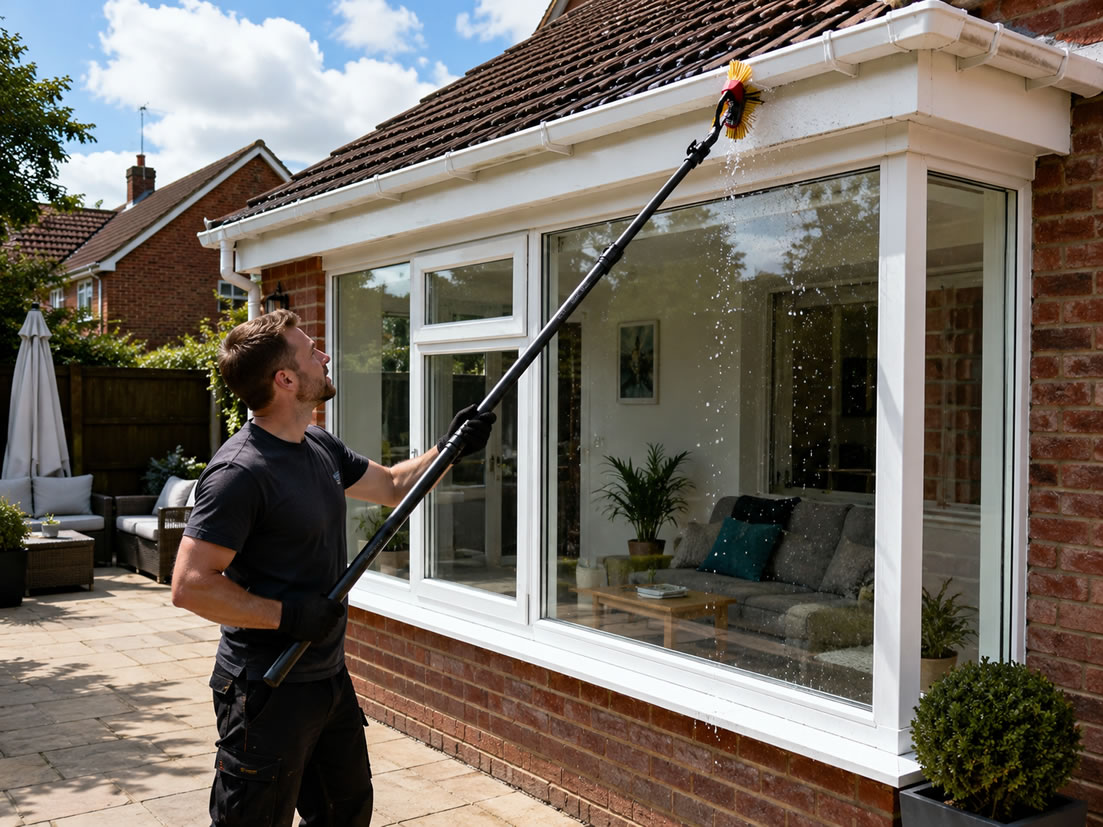
Not necessarily. Light surface dirt on a low porch or single-storey extension may be manageable with a long-handled cleaning tool from ground level.
However, professional cleaning may make more sense where:
- the boards sit above the first floor
- access is restricted
- gutters also need clearing
- growth covers large areas
- conservatories sit below the roofline
- timber boards need inspection
- the property has several roof levels
- solar panels, dormers or extensions complicate access
The main risk often comes from working at height rather than from the cleaning itself.
Typical soffit and fascia cleaning methods
Professionals may use several methods, either alone or in combination.
| Method | Best suited to | Main advantage | Main limitation |
| Hand washing | Small or accessible areas | Good control | Labour-intensive |
| Telescopic brush cleaning | uPVC and painted surfaces | Can work from ground level | Limited on heavy staining |
| Water-fed pole cleaning | Light dirt and general grime | Reduces ladder use | May not remove stubborn algae |
| Softwashing | Organic staining and algae | Uses low pressure | Chemicals require careful control |
| Low-pressure rinsing | Sound uPVC and aluminium | Fast removal of loosened dirt | Poor direction can force water into gaps |
| Steam cleaning | Selected robust surfaces | Helps loosen grime | Specialist equipment and higher cost |
| Pressure washing | Limited robust areas only | Quick visual result | Can damage seals, paint and vents |
Hand washing
Hand washing gives the cleaner good control around joints, gutter brackets, vents and decorative details.
A typical hand-cleaning process may use:
- warm water
- mild detergent
- a soft cloth
- a non-abrasive sponge
- soft brushes
- a rinse
Advantages
Hand washing:
- limits overspray
- suits delicate surfaces
- works well on low-level roofline
- allows close inspection
- reduces the chance of water entering soffit vents
Limitations
However:
- it takes longer
- direct access may still require scaffolding
- it can become expensive on large properties
- stubborn staining may need specialist products
Telescopic brush cleaning
Telescopic brushes allow cleaners to work from ground level on many two-storey homes.
The pole may carry:
- a soft brush
- purified water
- a mild cleaning solution
- a low-pressure rinse
This method often works well on white uPVC fascia and soffit boards.
Benefits
- reduces ladder use
- reaches long roofline runs
- suits regular maintenance cleaning
- creates less pressure than power washing
- allows workers to clean gutter exteriors at the same time
Limitations
- difficult corners may remain
- thick algae may need chemical treatment
- operators cannot inspect every joint closely
- access around conservatories may still be difficult
Water-fed pole cleaning
Water-fed pole systems use a brush head supplied with water through the pole.
Some contractors use purified water because it can dry with fewer marks.
This method suits:
- general dust
- traffic film
- light algae
- bird mess
- gutter exterior cleaning
- regular maintenance
However, it may struggle with heavy mould or long-standing staining unless the cleaner first applies a suitable detergent.
Softwashing soffits and fascia boards
Softwashing uses a cleaning solution with low-pressure application.
It can help remove:
- algae
- mould
- mildew
- organic staining
- green roofline growth
The cleaner may apply the solution, allow it to dwell and then rinse the boards gently.
Advantages
- less force than pressure washing
- useful on textured surfaces
- can treat biological growth
- often produces longer-lasting results than water alone
- suitable for many uPVC roofline systems
Limitations
- chemical strength must suit the material
- runoff requires control
- nearby plants need protection
- some metal components can react to unsuitable products
- old paint may loosen further
- badly faded uPVC may not return to its original colour
A responsible contractor should explain which product they intend to use and how they will protect walls, windows, plants and guttering.
Low-pressure rinsing
After brushing or softwashing, a contractor may use a low-pressure rinse.
The operator should direct water away from:
- soffit vents
- roof gaps
- loose joints
- electrical fittings
- open window vents
- damaged timber
Even low pressure can cause problems when the cleaner sprays water directly into roof voids or ventilation slots.
Pressure washing soffits and fascia boards
Pressure washing can remove dirt quickly, but it carries several risks.
A powerful jet may:
- force water into soffit vents
- loosen gutter seals
- damage old paint
- lift weak uPVC trims
- expose rotten timber
- mark walls
- drive water behind boards
- damage external lights or cameras
For this reason, pressure washing should not become the default roofline cleaning method.
A contractor may use reduced pressure on selected robust surfaces, but they should keep the nozzle at a sensible distance and avoid vulnerable joints.
Steam cleaning
Steam cleaning uses heated water at controlled pressure.
The heat can help break down stubborn grime and algae. However, this method still requires care around:
- painted timber
- sealants
- vents
- gutter joints
- delicate trims
Steam cleaning may cost more because it requires specialist equipment.
Cleaning uPVC soffits and fascias
uPVC roofline remains common because it needs relatively little maintenance.
A suitable cleaning method may include:
- brushing away cobwebs and loose dirt
- applying a mild detergent
- agitating stubborn areas
- rinsing at low pressure
- drying or allowing the surface to air dry
Products to avoid
Homeowners and cleaners should avoid:
- abrasive pads
- strong solvents
- undiluted bleach
- sharp scrapers
- harsh wire brushes
- excessive pressure
- products that attack seals
Can yellow uPVC become white again?
Cleaning can remove surface dirt and algae. However, it may not reverse permanent yellowing caused by age, ultraviolet exposure or chemical damage.
In that case, replacement or specialist restoration may provide a better visual result.
Cleaning timber fascia boards
Timber fascia requires a different approach because dirt may hide paint failure or decay.
Before cleaning, inspect for:
- peeling paint
- exposed wood
- soft areas
- cracked joints
- mould
- staining below gutter brackets
- water damage
- insect damage
A gentle wash may prepare the surface for repainting. However, strong water pressure can drive moisture into the timber and lift more paint.
Where boards have started rotting, cleaning will not restore them. They may need local repair or complete replacement.
Cleaning aluminium roofline
Powder-coated aluminium soffits and fascia boards can usually tolerate gentle washing with a suitable detergent.
The cleaner should avoid:
- abrasive pads
- acidic cleaners
- alkaline products not approved for the finish
- steel wool
- harsh solvents
- excessive pressure
Scratches can damage the protective coating and reduce the appearance of the system.
Cleaning soffit vents
Ventilated soffits help move air through the roof space.
Dirt, insects and cobwebs can partially cover the vents. However, aggressive washing may force water into the loft.
A safer method may include:
- dry brushing
- vacuuming
- wiping
- gentle low-pressure rinsing
- clearing removable grilles
The cleaner should not seal, paint over or block ventilation openings.
Why gutter cleaning matters at the same time
Dirty soffits and fascias often result from gutter problems.
Common causes include:
- blocked gutters
- leaking unions
- incorrect gutter falls
- overflowing outlets
- cracked downpipes
- loose brackets
Cleaning the boards without fixing the gutter can lead to fresh staining after the next heavy rain.
Therefore, a complete quote may include:
- removing gutter debris
- checking outlets
- testing downpipes
- cleaning gutter exteriors
- identifying leaking joints
- washing soffits and fascia boards
Cleaning external gutter surfaces
The outside face of white gutters often develops black streaks known as “tiger striping”.
These marks can contain:
- dirt
- pollution
- oxidised material
- roof runoff
- organic residue
A soft brush and suitable cleaner may improve the appearance. However, strong rubbing can leave shiny or scratched patches on aged plastic.
Soffit and fascia cleaning around conservatories
Conservatories can make roofline access difficult.
A contractor may need:
- telescopic poles
- scaffolding
- a mobile tower
- specialist platforms
- access from another elevation
They should not place ladders or heavy equipment directly onto a conservatory roof unless a proper load-bearing access system protects it.
Cleaning around cameras, lights and cables
Roofline boards often carry:
- security cameras
- external lights
- alarm boxes
- television cables
- satellite cables
- festive-light hooks
Before cleaning, the contractor should identify these items and avoid spraying water directly into electrical equipment or cable entries.
Typical soffit and fascia cleaning costs in the UK
Prices vary according to the size of the property, access and level of staining.
| Cleaning job | Broad UK budgeting range |
| Small porch or extension roofline | £80–£200 |
| Bungalow soffit and fascia cleaning | £150–£350 |
| Typical terraced or semi-detached house | £200–£500 |
| Larger detached property | £350–£800+ |
| Roofline plus exterior gutter cleaning | £250–£700+ |
| Gutter clearance added | £75–£300+ |
| Scaffolding or specialist access | £500–£2,000+ |
These figures offer general planning guidance rather than fixed prices.
A small house may cost more than expected where a conservatory, narrow side access or several roof levels complicate the work.
What affects the price?
The main factors include:
- property size
- number of storeys
- roofline length
- access
- conservatories
- dormers and extensions
- board material
- level of algae and mould
- gutter condition
- whether downpipes need checking
- scaffolding
- exterior window cleaning
- regional labour costs
How long does soffit and fascia cleaning take?
| Property type | Typical duration |
| Small extension or porch | One to three hours |
| Bungalow | Half a day |
| Terraced or semi-detached house | Half a day to one day |
| Larger detached property | One to two days |
| Complex access with scaffolding | One to three days |
Heavy staining and gutter repairs can extend the job.
How often should soffits and fascias be cleaned?
There is no fixed schedule. However, many homeowners arrange cleaning every one to three years.
More frequent attention may help where:
- trees surround the house
- the property sits beside a busy road
- north-facing boards develop algae
- gutters overflow regularly
- birds nest near the roofline
- white uPVC shows dirt quickly
Regular gutter maintenance can reduce the need for frequent fascia cleaning.
Can homeowners clean soffits and fascia boards themselves?
Homeowners may clean low-level roofline with a telescopic pole from the ground.
Suitable DIY tasks may include:
- brushing cobwebs
- washing a porch fascia
- cleaning a single-storey extension
- wiping low uPVC boards
- rinsing exterior gutters gently
Avoid:
- leaning from upstairs windows
- standing on guttering
- working from an unsecured ladder
- pressure washing from height
- climbing over conservatories
- spraying electrical equipment
- forcing water into soffit vents
For two-storey properties, professional equipment usually provides a safer option.
Signs that cleaning is not enough
Cleaning may reveal that the roofline needs repair.
Warning signs include:
- cracked fascia boards
- soft timber
- peeling paint
- sagging gutters
- loose soffit panels
- missing vents
- gaps at joints
- water stains returning quickly
- bird or pest entry
- extensive uPVC discolouration
- damaged brackets
In these cases, ask for a separate repair or replacement quote.
Cleaning versus replacing soffits and fascias
| Condition | Likely option |
| Light dirt and algae | Cleaning |
| Heavy but removable staining | Softwash or specialist clean |
| Permanent uPVC yellowing | Cleaning may help, but replacement may improve appearance |
| Peeling timber paint | Clean, prepare and repaint |
| Local timber rot | Repair or partial replacement |
| Widespread timber decay | Full replacement |
| Cracked uPVC panels | Replacement |
| Sagging gutters and weak fascia | Roofline repair before cleaning |
How to prevent future staining
Keep gutters clear
Clear leaves, moss and silt before they cause overflow.
Repair leaking joints
Water escaping at gutter unions often leaves vertical stains on fascia boards.
Check downpipes
Blocked downpipes can cause gutters to overflow during heavy rain.
Trim suitable overhanging branches
Reducing shade and falling debris may help roofline boards dry faster.
Clean light growth early
Algae and mould become harder to remove after several years.
Maintain timber paint
Prompt repainting helps protect timber from moisture.
Avoid harsh DIY chemicals
Strong cleaners may cause permanent marks or damage nearby surfaces.
Comparing soffit and fascia cleaning quotes
| Quote item | Company A | Company B | Company C |
| Roofline material identified | |||
| Cleaning method | |||
| Safe access included | |||
| Detergent or treatment named | |||
| Gutter exterior cleaning | |||
| Gutter clearance | |||
| Downpipes checked | |||
| Soffit vents protected | |||
| Windows and walls rinsed | |||
| Minor repairs identified | |||
| Insurance confirmed | |||
| VAT included | |||
| Total price |
Questions to ask a cleaning company
- What material are my soffits and fascias?
- Which cleaning method will you use?
- Will you use pressure washing?
- How will you protect soffit vents?
- What cleaning product will you apply?
- How will you protect plants and windows?
- Will you clean the exterior gutter surfaces?
- Does the price include gutter clearance?
- Will you check downpipes?
- How will you reach boards above a conservatory?
- Will you identify damaged or rotten areas?
- Do you hold public liability insurance?
- Does the price include VAT?
Warning signs of a poor quote
Be cautious where a company:
- plans to pressure wash everything without inspection
- cannot identify the roofline material
- ignores peeling timber paint
- offers to stand on a conservatory roof
- does not discuss soffit ventilation
- cannot name the cleaning chemical
- excludes cleanup without saying so
- claims all staining will disappear
- offers roofline painting automatically
- does not provide a written quote
Request soffit and fascia cleaning quotes
When requesting a quote, provide:
- property type
- number of storeys
- approximate roofline length
- soffit and fascia material
- gutter condition
- level of staining
- conservatories or extensions
- cameras, lights or cables
- narrow side access
- safe photographs from ground level
Find Me Quotes can connect homeowners with local exterior cleaning and roofline specialists.
By comparing several written quotes, you can review the cleaning method, access, gutter work and protection included in the price.
Frequently asked questions about soffit and fascia cleaning
What is the best way to clean uPVC soffits and fascias?
A mild detergent, soft brush and low-pressure rinse usually suit sound uPVC. Avoid abrasive tools, harsh solvents and excessive water pressure.
Can soffits and fascias be pressure washed?
Pressure washing can damage seals, paint, vents and weak trims. A contractor may use carefully reduced pressure on selected surfaces, although gentler methods usually provide more control.
Will cleaning make yellow uPVC white again?
Cleaning can remove dirt, algae and pollution. However, it may not reverse permanent yellowing caused by age or ultraviolet exposure.
Should gutters be cleaned at the same time?
Often, yes. Blocked or leaking gutters cause many fascia stains. Cleaning the boards without addressing the gutter may allow the marks to return quickly.
How much does soffit and fascia cleaning cost?
A typical terraced or semi-detached house may cost around £200–£500. Larger homes, difficult access and scaffolding can increase the price.
How often should roofline boards be cleaned?
Many properties need cleaning every one to three years. Shaded homes, busy roads and nearby trees may create a need for more frequent maintenance.
Can mould grow on soffit boards?
Yes. Damp, shaded soffits can develop mould and algae. Cleaning may remove it, but recurring growth can indicate gutter overflow or poor airflow.
Can timber fascia boards be cleaned?
Yes, although the contractor should inspect paint and timber condition first. Peeling paint and rot may require preparation, repainting or replacement rather than cleaning alone.